Sunday, January 26, 2020

#AuthorInterview with Michael O'Keefe @mokeefewriter


Today, Feathered Quill reviewer Barbara Bamberger Scott is talking with Michael O'Keefe, author of A Reckoning in Brooklyn

FQ: How much of Butchie or Eddie is really you?

O'KEEFE: Actually none. The character in the book who represents me most closely is Paddy Durr, the detective and main character of my first novel, Shot to Pieces. Butchie and Eddie are composites of cops and detectives who I admired as a kid. They put me on the right path and kept me there. They also imbued in me an unquenchable desire to protect people who couldn’t protect themselves, and the moral underpinnings to choose to always do the right thing, even when it wasn’t the most advantageous thing for me.

FQ: Have you ever worked with a tight group of cops such as you depict in the book, with family and social connections that seem so essential?
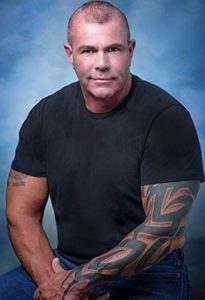
Author Michael O'Keefe
O'KEEFE: As a cop and detective for almost twenty-five years in the NYPD, I experienced that brotherhood and family-like love and loyalty on an every day basis. Butchie’s and Eddie’s loyalty to each other isn’t contrived. I lived it.

FQ: In your years as a cop, did you have any connection, direct or peripheral, to the ABSCAM scandal or similar politically motivated crime schemes?

O'KEEFE: I worked a number of organized crime and gang conspiracy murder cases, but with respect to government corruption; I was almost indicted for murder at the behest of the mayor of New York, for the simple act of saving my own life—shooting and killing a man who was trying to do the same to me. After I was acquitted, the mayor sicked his pals in the US Attorney’s Office on me and my Anti-Crime team. Their position was; we were making too many gun arrests and seizures. “No one could be that good,” the US Attorney maintained. Five years and five grand juries later, they found out they couldn’t get a jury to agree.

FQ: You have written two books about crime in Brooklyn; what is your sense of the direction that area is going – up or down – in the current era?

O'KEEFE: The Bushwick section of Brooklyn, where I grew up and later worked, has changed substantially since I retired. It went from a drug infested murder-warren to something akin to the West Village. Art galleries, restaurants, gourmet shops etc. But presently violent crime is rising at a precipitous rate, even in Bushwick. The culprits are the mayor, the city council, and the media who have beaten down the police and handcuffed them from doing their job. There will be a rebound and a return to sanity as it relates to criminal justice policy, but it’s going to get worse before it gets better.

Author Michael O'Keefe
FQ: This book, while violent and filled with hateful villains, is essentially a hopeful story that shows how friends can help friends and morality is an absolute that rises at times even above the law. Is that a theme that was observable in your work as a cop?

O'KEEFE: It was the essence of being a cop. A reviewer of the book stated this premise succinctly; “This is not a book for the tender or easily offended, but it has the visceral power to inform the reader what it’s like to live a violent life on the side of the angels,” wrote Otto Penzler, of Penzler Publications.

FQ: Who is your favorite crime/tough guys novelist?

O'KEEFE: I grew up a fan of Hemingway, Steinbeck and Fitzgerald. They wrote about crime with a very literary approach. I discovered Wambaugh in high school. I loved his human portrayal of cops, not excusing but understanding human frailty in law enforcers. Presently I am big fan of Michael Connelly, Nelson DeMille and Lee Child. They get it. They have taken the time to know cops and do their research. James Patterson not so much.

FQ: Do you have plans for the next creative endeavor?

O'KEEFE: I expect to release, Burnt to a Crisp, a Paddy Durr novel, in November of this year. I’m already half done with the sequel to that. In the meantime, I am preparing A Reckoning in Brooklyn and Shot to Pieces for release as audio books. I’m hoping to have them both available before the spring.

FQ: Do you have plans, as seems possible from the book’s ending, for a sequel? Perhaps the development of Paddy Durr?

O'KEEFE: As you can see from the previous question, that is a resounding yes. But eventually Paddy must retire. Despair not! Paddy’s children, Patrick and Kaitlynn have followed him into the “family business.” Then there is an entire generation of young cops and detectives Paddy has mentored over the years. The possibilities are limited only by my imagination.

#BookReview - A Reckoning in Brooklyn @mokeefewriter

A Reckoning in Brooklyn
By: Michael O'Keefe
Publisher: Ingram Spark
Publication Date: November 2019
ISBN: B07YNY9GMS
Reviewed by: Barbara Bamberger Scott
Date: January 25, 2020
An unlikely pair of cops faced with an unsavory nest of unrepentant bad guys use their special skills to mop up the mess in New York City in the late 1970s.
The place is Brooklyn, the neighborhood Bushwick, first settled by Germans, then inundated with Italians who gradually dominated the criminal life of the neighborhood. Then the area became a stomping ground for Hispanics and others who, unable to thrive by conventional means, turned to crime and gang violence, still overseen by the established Italian overlords. Joey “Butchie” Bucciogrosso grew up on its mean streets, remarkably untouched by the corruption, though unknown to him, his own family had been brutalized in the worst possible way when a prominent capo raped his mother in “payment” for her father’s “dues” to the mob weeks before her wedding. When Butchie is fifteen, he learns of this perfidy and vows to eliminate the perpetrator and all like him. 
After a harrowing, heroic stint in the Marines in Nam where he nearly loses his life saving his fellow soldiers, Butchie returns to Brooklyn and becomes a policeman. His partner is Eddie Curran, an Irish immigrant with a charming brogue and, like Butchie, no mercy in his heart for wrongdoers like the ones he observed back home and now sees in Bushwick. Both Eddie and Butchie know how to box and shoot, and are not afraid to wipe out the senseless brutality of street crime at its core – mob rule. Together they will go up against the worst sorts of mobsters – those motivated by political ambitions – and settle some old scores.
As a retired NYPD detective who was raised in New York City, O’Keefe follows one of the primary rules of composition: write about what you know. His debut novel, Shot to Pieces, shares the Brooklyn setting. In an afterward to A Reckoning in Brooklyn, he draws connecting lines between its fictional happenings and the very real ABSCAM Investigation that arose out of the New York underground and rose to the level of national political scandal. As creator of gutsy characters and twisting plots, O’Keefe applies violence and vitriol with a heavy brush. He is also at home, it seems, writing about women, who play active roles in this gang-busting saga. The personal histories of Butchie and Eddie add layers of empathy as well, as the reader will see in stark detail how amorality is not necessarily an inherited condition, and organized religion often offers only homilies, not solutions, when real evil is afoot. Fair handed, O’Keefe never neglects the human and redeemable aspects among his wide range of street savvy good and bad guys, allowing exoneration for the innocent and absolute elimination for the guilty. 
Quill says: A Reckoning in Brooklyn will satisfy fans of the cops and mobsters genre, offering two indomitably tough protagonists duking it out with an almost endless stream of greedy, depraved villains. 
For more information on A Reckoning in Brooklyn, please visit the author's website at: www.MichaelOkeefeAuthor.com

Wednesday, January 22, 2020

#BookReview - My Dear Hamilton

My Dear Hamilton: A Novel of Eliza Schuyler Hamilton

By: Stephanie Dray and Laura Kamoie
Publisher: William Morrow Paperbacks
Publication Date: April 2018
ISBN: 978-0062466167
Reviewed by: Ellen Feld
Review Date: January 19, 2020
Stephanie Dray and Laura Kamoie, authors of the highly successful American's First Daughter, tackle another great topic as they take on the life of Elizabeth Schuyler Hamilton, the wife of Alexander Hamilton.
The story opens in 1825 when James Monroe, the fifth president of the United States, comes to Harlem, NY to visit Eliza. By this time, Alexander Hamilton has been dead for over twenty years. Why has Monroe come to visit? To understand that, and all the "history" between them, it's necessary to go back in time...
It is now 1777 and the reader is taken back to when Eliza, or Betsy as she was called in her early years, is a young woman living with her parents, General Philip Schuyler and wife Catherine. The family is wealthy and Betsy's biggest worry at the time is that her sister Angelica has run off and eloped. But we soon learn that General Schuyler has been accused of dereliction of duty. As a devoted daughter, Betsy will do whatever she can to help her father, who is later acquitted of the charges.
In 1780, while staying with her aunt in New Jersey, Betsy meets Alexander Hamilton, one of George Washington's aides-de-camp. They'd actually met before, at the Schuyler's house where Hamilton dined with the family - but the courtship begins in earnest in New Jersey. While intrigued by Hamilton's good looks and charm, Eliza is sure that the military man will have no interest in her as she's known around her family as the practical sister and typically ignored by the men who visit. But Hamilton is intrigued by Eliza's knowledge and confidence and they are soon married. The novel follows the couple through the ups and downs of family life, while also delving deeply into Hamilton's contributions to building a new country. 
My Dear Hamilton follows the life of Eliza Schuyler Hamilton, not just through the more famous episodes such as the writing of The Federalist Papers and the death of her husband, but also through lesser known events such as the death of her eldest son. At just over 600 pages, this is a book that requires a bit of time and dedication by the reader. But that time and dedication will be well-rewarded with the understanding that comes from reading this book. While there is not a lot known about Eliza, and the authors had to use a bit of fiction here and there, overall the story comes across as a very believable version of what happened during the founding of our country. Kudos to the authors for their exhaustive research and for bringing to life the story of a very fascinating woman.
Quill says: For fans of historical fiction, particularly of Revolutionary War history, My Dear Hamilton is a fantastic read.

#BookReview - You Are Mine, Porcupine

You Are Mine, Porcupine

By: Helen L. Wilbur
Illustrated by: Stephanie Fizer Coleman
Publisher: Sleeping Bear Press
Publication Date: February 2020
ISBN: 978-1534110038
Reviewed by: Ellen Feld
Review Date: January 19, 2020
A sweet baby porcupine learns about the world around him in the new book You Are Mine, Porcupine.
The story opens with a little porcupup (the term for baby porcupines) exploring the woods. His mother keeps a close eye on him as they chew on tree stumps and eat clover, leaves, and dandelions. His mother warns him that there are many dangers in the woods, particularly for porcupines who move very slowly. But, she tells him, porcupines have quills that help protect them. 
The woods are deep and dark. Beware!
They're full of hungry wolves and bear.
So don't forget those long, sharp spines
Protect all wandering porcupines.
There is so much to see in the woods and the little porcupup has wandered a bit too far from his mother. It isn't long before a wolf spots the baby and begins to follow him through the woods...
You Are Mine, Porcupine is a wonderful story about porcupines, a rodent who seems to get little coverage in children's books. While the wolf stalking the baby may frighten more sensitive readers, the mother's advice is taken to heart by her child so the story has a happy ending (the wolf gets a quick lesson on porcupine quills). Children will learn several facts about the small rodents simply by reading along and seeing what these cute creatures do during the day, as well as their nocturnal activities. As a bonus, there is a two-page spread at the back of the book with facts about porcupines. 
Quill says: A cute little porcupine will enchant young readers as they learn about the small rodents and see that a mother's love knows no bounds.

#BookReview - The World Almanac and Book of Facts 2020

The World Almanac and Book of Facts 2020
Publisher: World Almanac
Publication Date: November 2019
ISBN: 978-1600572302
Reviewed by: Ellen Feld
Review Date: January 19, 2020
You may think that in today's digital world, there's no need for a print version of The World Almanac, and if you do believe that, you'd be wrong. There's something about having a complete, and I mean complete, resource instantly available, sitting on your desk, ready to use. 
A new edition of The World Almanac comes out every year and while some of the material is the same from year to year, such as landmark decisions of the U.S. Supreme Court, there are also numerous new sections. New features this year include a 2020 election preview, the 2010 to 2019 decade in review, as well as new statistics on topics such as top-grossing movies and religious populations. A fun new section is the "Never Say Die: Memorable Comebacks by Athletes" that includes great comebacks from athletes such as Tommy John and Peyton Manning, all selected by the editors of the Almanac.
The statistics included in The World Almanac are truly mind-boggling. From the 100 tallest buildings in the world to presidential elections results by state, it's in here. And if you can't find it in this volume, it doesn't exist. Curious about U.S. Health Expenditures? It's in here - from 1960 through 2017. Wondering how your state income tax rates compare to the rates in other states? It's in here. Want to go hiking and need to find information about the national trails system? Pick up this book and you'll find your answers.
There are lots of reference guides on the market today, but none compare to The World Almanac and Book of Facts 2020. Each year the publishers of this volume put together the ultimate guide and while you may not need to purchase one every single year, it's a definite must-have that should be updated every few years. Whether you're a student about to embark on a research paper on the Constitution, or an avid political fan who wants to back up all arguments with facts, this is the perfect book to help you along the way.
Quill says: It may be the age of the Internet, but the print version of The World Almanac and Book of Facts 2020 is an invaluable resource.

Friday, January 10, 2020

#AuthorInterview with Amy Rivers @WritingRivers

Today, Feathered Quill reviewer Lynette Latzko is talking with Amy Rivers, author of All the Broken People.
FQ: I see that you’re a seasoned writer, but All the Broken People is your first endeavor into the psychological suspense genre. Why did you choose to write this type of story? 
RIVERS: I've always loved suspenseful novels, whatever genre they fall into, and I studied psychology because I love thinking about why people do the things that they do. Writing a psychological suspense novel was the perfect marriage of those two loves. But when I started writing full-time, I had a particular woman's story in mind, and while it involves psychology and is often suspenseful, it didn't fall squarely into the suspense/thriller genre. That first book turned into two books. After I finished the second book, I realized that if I wanted to dig deep into the topics close to my heart, I needed to go darker. Luckily, around that time, I became completely obsessed with kudzu and secrets and All The Broken People is the product of that obsession.
FQ: Will there be a sequel? I’m curious to find out if Larry Lee can truly break away from Jasper and move forward in his life despite all the tragedy he’s caused and had to endure.
RIVERS: Larry Lee is one of my very favorite people. At the moment, I don't have sequel planned. Larry Lee's story is sad, and I'd love to give him a happy ending. In fact, I hope he did find happiness, or at least peace, but I don't have anything more to say about him at this time.
 FQ: Why did you choose the small southern town of Jasper, Georgia, as the primary setting in your novel?
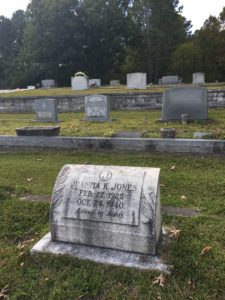
RIVERS: My husband's family lives in Jasper, Georgia. Until I met him, I'd never spent any time in the South. I grew up in the New Mexico desert. Georgia was absolutely fascinating to me. Everything from the landscape to the culture. It's very different from what I grew up with. Jasper is a beautiful small town north of Atlanta--and I adore it. But I grew up in a small town. I'm very familiar with the way that small town politics and society can be both good and very bad. When you live in a place where you know everyone and everyone knows you, it's hard to escape your past. The same forces that make it difficult to transcend your reputation or past actions also tends to be fiercely protective of its own, leading to corruption, cover-ups, and a willingness to overlook even the most horrendous crimes. Silence hides violence, and small towns can be very silent. Jasper seemed like the perfect place to stir things up. And, of course, there is kudzu.
FQ: When you write, do you base any of the characters on people in your life, or do they spring into life completely out of your imagination? 
RIVERS: Many of my characters are inspired by people I know or have met. I'm much more comfortable writing in the real world, so I can't help but think about how real people would react in extreme situations. But once I'm immersed in the story, the characters become their own people. I can still see resemblances to real people, but it doesn't take long to lose track of the inspiration and see the characters as unique individuals.
FQ: All the Broken People has won a few awards including the 2019 Distinguished Favorites by the Independent Press Award. What is your secret to writing award-winning novels?
RIVERS: Oh how I wish there was a secret! I try to write the best novel I can, creating characters who are relatable and will stick with my readers after they finish reading. With each story I write, I get better. I learn new things. Hone my craft. I think those are the things that have led to the critical successes that I've had with All The Broken People. I'm incredibly proud of this work, and I look forward to continuing to grow as a writer.
FQ: One of the themes of this novel relates to forgiveness and redemption. Do you believe that all people, regardless of how terrible their past behavior might have been, have the capacity for redeeming themselves, and ultimately being forgiven? 
RIVERS: I think that they both redemption and forgiveness require a certain amount of empathy and compassion. I do believe that people who do terrible things can seek redemption and be forgiven. In fact, I think that forgiveness is a necessary part of healing for victims of crime, or even just careless behavior. That being said, I know that there are people who are psychological incapable of empathy and so seeking redemption is most likely something that they would never think to do. Or, if they seek forgiveness outwardly, they may have ulterior. For instance, psychopathic serial killers might not be capable of seeking redemption. And it may seem impossible to forgive someone who commits such heinous crimes, but the ability to forgive is still invaluable in coming to terms with and moving on from said crimes.
FQ: What type of process do you go through when you’re writing, and does it differ between each story you write?
RIVERS: Every story I write starts with a character or a set of characters. Currently, I'm writing a story that revolves around two sisters and their family dynamic. Once I can picture my characters, I move on to a problem. One that would challenge those characters given their personalities, careers, or backgrounds. In All The Broken People, I started with Alice. I imagined her background. She is the child of an alcoholic and she has struggled with addiction herself. She's convinced herself that she's recovered, and it's true that she's not drinking anymore. But, as if often the case, Alice is co-dependent, obsessive, and self-destructive. Those qualities lead her down a road where she finally has to face who she is and how she's come to be in the situation she now finds herself. Combine that with a series of suspenseful and often frightening occurrences and you've got yourself a story. This is the way my mind works, so every story starts in a similar fashion, but with different characters and circumstances.
 FQ: While Alice is caring for Mae, she busies herself doing research for an article about the tragic life of Juanita Jones. Can you tell readers a little more about Juanita, and why you chose to include her in this story? 
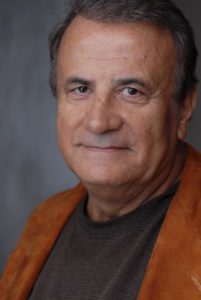
RIVERS: As I was researching the history of Jasper, Georgia and of Pickens County, I ran across the story of Juanita K. Jones, a 15-year old young woman who was killed by her husband. I'd been thinking about all the ways that domestic violence may present itself in a marriage - with my character, Alice, in mind. The story of Juantia's short life and brutal death struck a chord with me. The patterns of abuse present in her relationship with her husband were testbook, but the nature of her death was not. The year was 1940 and domestic abuse inside a marriage was something that people usually swept under the rug. Juanita was neither the first nor the last woman to die by her husband's hands, but her youth, her status in her hometown, and the fact that she was pregnant at the time of her death, gave the crime notoriety. Juanita's husband was convicted of murder at a time when even being charged with domestic abuse was practically unheard of. I wondered how Alice, with her own troubled past, would respond to Juanita's story - how it would make her feel about her own life and life choices.
I met with Juanita's family, and as I learned more about her, I couldn't shake the need to give this woman a voice. And, with her family's permission, I incorporated her story into my book as a lens through which Alice beings to understand her own situation. After publication, I met with the director of the North Georgia Mountain Crisis Network to establish the Juanita K. Jones Memorial Fund, which will benefit domestic violence victims in North Georgia. Sharing Juanita's story firmed my resolve to instill in everything I write, fiction or otherwise, a sense of responsibility to those who have come before us, and for future generations.

#AuthorInterview with Behcet Kaya @bhctkaya123

Today, Feathered Quill reviewer Lynette Latzko is talking with Behcet Kaya, author of Body in the Woods: A Jack Ludefance Novel
FQ: The invention and use of stealth technology in aircraft is a critical component of your novel, and possibly the reason why one of the characters meets his untimely death. Can you briefly educate readers about what you discovered with regards to this type of technology?
KAYA: Actually invisible technology is not a new concept. In fact the joint strike force F-35 has that technology. But even the F-35 JSF is not a hundred percent invisible; the Germans have radar that can detect a F-35 war plane. What I did was make it a little more hi-tech, so to speak, and far beyond what is currently on the market.
Author Behcet Kaya
Author Behcet Kaya
FQ: Body in the Woods has all the suspenseful elements and a strong, likable character, Jack Ludefance, to become a great Hollywood movie, at least in this reviewer’s opinion. Who would you like to see play the part of Mr. Ludefance, if your novels were ever made into movies? 
KAYA: I think Matthew McConaughey would be ideal to play Jack Ludefance. He’s Southern, rugged, and a versatile actor.
FQ: I saw that you'll be releasing a new Jack Ludefance novel next year. Will any other characters from this book be making an appearance in the new story? 
KAYA: Yes! The title of the novel is Appellate Judge. Rudy will be hired by Jack to do some hacking, as well as Jack’s sister Margaux, his love interest Lee, and Jack’s navy buddy, Hiker, who is now Sheriff of Santa Rosaria.
FQ: Aside from another great installment in the Jack Ludefance series, are you currently working on any other projects? 
KAYA: Yes, but I don’t know that I should reveal too much as it is just in its conceptual infancy stage. I am thinking about writing a fictionalized story based on a true story of a Turkish man’s life during the late eighteen hundreds and early nineteen hundreds period. A Robin Hood kind of bandit who steals from the rich and helps the poor. The local people always hid him and actually feared him. Because of these actions the authorities could never capture him. The evidence of his story is in the Turkish archives and has created quite a myth around his life. However, his descendants are asking too much money for the rights to his story at this point in time.
FQ: You have successfully written several novels, including Road to Siran and Murder on the Naval Base. What advice would you give to new authors who are just starting out in their writing career?
KAYA: Read ferociously and learn to listen. A writer’s ears should be like a sponge. He must pay attention to everything and everyone around him; the conversations at next table in a restaurant, riding on a bus, or train, or plane. My late mother-in law, who was also a great writer and a columnist, always listened. We would go to a restaurant and have dinner and carry on a conversation, but she could tell me everything that was going on at the next table. There was a post on Facebook not too long ago that read: “I am a writer. Anything you say or do will be written.” There is also the big hurdle of learning how to market your books; something that I am still working on.
FQ: What motivates and draws you towards writing thrillers? Do you ever get mentally exhausted when you’re writing a particularly fast-paced scene?
KAYA: I guess my writing crime stories comes naturally. I grew up reading crime thrillers. No, I never get mentally exhausted. Every writer is different. There may be times when I don’t write for days at a time. And other times I stay up until early morning until all the ideas are down on paper. My wife is my right arm; not only does she do the first draft editing, but she is also my sounding board. I often ask her what is the right thing to do in such and such circumstances and she will give some ideas which I let percolate in my mind. Sometimes I let go for a while and later the full thoughts will come to me. In other words, I don’t write continuously, but when I am in the writing mode I can’t be stopped.
FQ: Who are your favorite authors, and do they inspire you when you’re writing? 
KAYA: Currently I am enjoying the character of Colonel Drummer in Brian Haig’s novels. But my favorites are the classics - Leo Tolstoy, Turkish author Yasar Kemal, Shakespeare, Dostoevsky, Charles Dickens, D.H.Lawrence, Alexander Dumas, to mention a few.
FQ: Over the years you've been interviewed by several readers and reviewers about your books. Is there anything you’re anxious to let readers know more about you, or your writings, that hasn’t been asked about in the past? 
KAYA: In writing I need inspiration as most writers do. In the spring of last year I took up the violin and am studying with an excellent teacher, who by the way, may be featured in my next novel.