Tiny Tim and the Ghost of Ebenezer Scrooge
By: Norman Whaler
Publisher: Beneath Another Sky Books
Publication Date: October 2017
ISBN: 978-1948131025
Reviewed by: Holly Connors
Date: December 2018
Did you ever wonder what happened to Ebenezer Scrooge after that fateful Christmas day when he discovers the true meaning of the holiday? Did he keep his promise? Did he truly become a changed man? In this sequel to A Christmas Carol, author Norman Whaler creates a believable and enjoyable story that tells us what might have happened.
As the story opens, we learn that Scrooge has just died. Alas, everybody is quite sad because Scrooge did indeed become a changed man and they all dearly loved him. While all are saddened, Tiny Tim is particularly grief stricken because Scrooge had become like a second father to him.
The Cratchit family attends Scrooge's funeral and then tries to return to their everyday, normal lives. Tim now works with his father at Scrooge's company, "Scrooge & Marley & Cratchit," but with so many memories of Scrooge within the walls of the office, Tim just can't concentrate on his job. Sadness and grief overcome him, he loses his faith, and he becomes a truly lost young man.
Next, the reader is introduced to Becky, a young woman who had been Tim's school sweetheart. Becky was from a wealthy family and they had determined that Tim was not a suitable match for the girl. Instead, she was forced into a loveless marriage with a wealthy but cruel man, where her sole joy was caring for her son Jimmy. But when her husband started showing his violent side, Becky made the bold decision to leave the comforts her husband provided in the hopes of keeping Jimmy safe from his beatings. The two found themselves living in the poorest section of London, struggling to find enough food to eat. When Becky's health began to suffer, it appeared all might be lost for her and her little boy.
When all seems lost, Tim is visited by the ghost of Ebenezer. Like the ghosts of Christmas Past, Present, and Future in The Christmas Carol, the ghost of Ebenezer tries to show Tim how blessed he truly is, and that life has meaning. The question is, will Tim be able to get over the death of his friend, find purpose, and perhaps reunite with Becky?
Attempting to write a sequel to a classic such as A Christmas Carol is a bold move and one not many authors would attempt. Norman Whaler, however, does an admirable job of bringing the beloved characters that Charles Dickens created back to life. Like the original, this book is divided into 5 "Staves" (a term Dickens used to denote each chapter - a musical notation). Whaler also sprinkles his text with language that Dickens might have used to help set the mood and includes numerous illustrations, some with a definite Victorian feel, others more modern (clip art). At the back of the book are numerous Christmas carols that are mentioned within the pages of the story. While it is unlikely that any author could match the beauty of Dickens' classic, Tiny Tim and the Ghost of Ebenezer Scrooge does a good job of taking the reader back to old London. Throughout the story, there's a strong Christian message that Ebenezer brings of love and hope for the future, that both fans of Dickens and those who are looking for a good family story can enjoy.
Quill says: Looking for a family Christmas story with a strong message of love and hope? If so, you should definitely take a look at Tiny Tim and the Ghost of Ebenezer Scrooge.
By: Brit Lunden Publisher: Chelshire, Inc. Publication Date: January 2018 ISBN: 978-1947188907 Reviewed by: Holly Connors Review Date: January 6, 2019
A sleepy little town in Georgia is the perfect setting for a paranormal thriller that amps up the "creepy" factor in a story with more twists and turns than an old country road.
Clay Finnes is the sheriff of Bulwark, Georgia, a small town where nothing much happens. He's got a slightly annoying deputy, Owen Bishop, who means well but just isn't the brightest light bulb in the pack. As the story opens, Clay and Owen are at the scene of an accident where an out-of-town couple got their car stuck in a big green pond of muck. The accident happened at the outskirts of town, a place where there are remnants of an old road, but nothing else. Where were they coming from and where did that pond of bad smelling water come from?
After finishing the investigation at the scene of the accident, Clay goes to interview the couple. They're staying nearby at a hunter's cabin, with the owner there to keep an eye on them, while they wait for the ambulance. The husband is motionless on the couch, and the wife isn't much better, babbling about a witch in the woods. When she spots a picture on the mantle of the hunter's dead wife and claims, "...she's the witch that took my children," the hunter is understandably upset. That's when Dayna Dalton, an annoying local reporter, shows up at the door. Fortunately, Clay is right behind her and he forces her out of the way as he goes in the house. Clay doesn't have much luck interviewing the couple who are soon hustled off to the hospital.
At the hospital, Clay runs into his wife Jenna. Unfortunately, they are separated...things fell apart shortly after their young daughter Claire went missing the previous year. Clay still loves Jenna and hopes she feels the same, but with a hot doctor making the moves on her, things don't look too promising. Meanwhile, the wife from the accident is still babbling, telling anyone who will listen that they need to find the gingerbread house, which is where her children were taken. When wolves are mentioned too, Clay has had just about enough. What is going on?
Bulwark is one of those fun stories that grabs you quickly and doesn't let go until the very end. At just 109 pages, it won't take long to read and with short chapters that keep tempting you to read just one more, you'll likely finish the book in one sitting. The story has witches, werewolves, a town with a long-hidden history, and a very determined sheriff, who not only is intent on solving the mystery but also getting his wife back. Don't think you've figured this one out as you read, and don't assume you know who is good, or bad...you'll likely be wrong, which is what makes this story so enjoyable. The only thing the book needs is a careful review by an editor as there are numerous editorial errors - not enough to ruin the story but they do get annoying. Beyond that, however, this is a very good story that will leave you quite satisfied.
Quill says: If you like your thrillers with lots of twists, plenty of "creepy," some paranormal events, and a fast-moving plot, check out Bulwark. You might just be afraid to turn off the lights after reading the last page.
For more information on Bulwark, please visit the author's website at: caroleproman.com
By: Ann Crawford Publisher: Lightscapes Publishing Publication Date: July 2018 ISBN: 978-1948543200 Reviewed by: Holly Connors Review Date: January 1, 2019
Do we have guardian angels watching over us as we go about our daily lives? In this lighthearted, and at times very "deep" romantic comedy, author Ann Crawford has imagined a world of guardian angels that will stay with you long after you've read the last page.
As the story opens, we meet Brooke, an angel who has requested the "hardest job in the universe," which just happens to be an Earth assignment. Henry, a somewhat overweight, balding angel, is a manager of "Angelic Affairs." He's questioning Brooke about her desire to go to Earth, but she convinces him that it's what she truly wants. Soon, Brooke is on Earth, Southern California to be exact, getting to know Jack, the human she's been assigned to help. Jack already has three angels watching over him - as does every human. Each has a different job, such as whispering positive messages in their charge's ear, while another keeps track on a computer of what's going on. When a human is ready to "wake up," to find true joy and love, they get a fourth angel because of course, the workload increases. That's where Brooke comes in - if Jack is ever going to enjoy life to the fullest, he will need Brooke's help. The problem is that while Jack adores his children, his wife, and her lover, definitely put a kink in his finding true happiness.
Next, we meet David, another angel, who is in another office, talking with another angelic affairs manager, about going to Earth. His manager, too, gives in and sends David to Earth to watch over his assignment. Meet Emily, a sweet woman, who is wandering aimlessly through life and a loveless marriage.
Brooke and David quickly learn what's required to help their respective humans, thanks in large part to the other angels watching over Emily and Jack. When Jack is arrested for having drugs in his car, and Emily is truly lost after her beloved mother dies, it appears as if Brooke and David have a heck of a lot of work ahead of them. As their work continues, the two angels start to spend more and more time together and "things" start to happen. Perhaps a couple of angels might also find true love and joy...
When I began reading Angels on Overtime, I wasn't quite sure what kind of story it was, but I quickly decided it was a lighthearted tale of guardian angels. But as I read further, I began to realize that there is a lot more to this story than simply a fun angel adventure. This was especially true in a chapter where Brooke and David were shown the lives of several people in despair, people whose tragic lives lingered over the pages. I paused and re-read those pages a few times to get the full meaning of each person's experience - it was deeply moving. While the story was initially about Jack and Emily, and the choices they made/would make, the way the author slowly brought about the relationship between Brooke and David was truly enjoyable. Finally, there are many words of wisdom throughout the story, ideas such as "At bottom, everything is a choice...absolutely everything," (pg. 35) that will cause the reader to reflect on his/her own life.
Quill says: Angels on Overtime is a truly unique tale, filled with humor, a great cast of characters, and a comforting premise of how we each have angels watching over us. The story will surely linger with the reader in a satisfying way, long after the last page has been read.
For more information on Angels on Overtime: A Divine Romantic Comedy, please visit the author's website at: anncrawford.net
Today, Feathered Quill reviewer Barbara Bamberger Scott is talking with John Fennell, the author of of Raven and the Panther
FQ: You say in your biography that much of what you write links directly to events in your life – can you give a specific example in Raven and the Panther?
FENNELL: Raven's upbringing in the book is almost identical to the real Raven Anderson (who is my wife Barbara Ann). Barbara was raised by her grandmother and uncle, as was described in the book. Raven's personality is almost like Barbara's, although embellished for reader enjoyment. This connection I had in real life drove me to develop Raven Anderson's character.
FQ: Did you make a conscious decision to highlight heroines more than heroes in this book?
FENNELL: Absolutely, I was the youngest of four children, the other three were girls ranging from 5 to 15 years older. Each one of my sisters were very successful in life, even as young teens/adults, they were highly motivated and driven. I guess that must have had a tremendous influence on me. Even early on in my life, they were spaced apart enough in age to show me a different perspective of life from their point of view, because of this, I somehow picked up on their life experiences. With that being said, I have the upmost respect for heroines due to the environment I grew up around. They were three unique individuals with different personalities.who played a big part of my childhood.
FQ: In your experience, is it typical for people in mining communities to want to stay near home, as Raven insists on initially, and to be involved in the production of coal?
FENNELL: Yes, I was involved in coal mining and worked shoulder to shoulder with hundreds of men and woman. Coal miners is a very high paying profession often out-pacing the average mining engineer's salary due to the danger and hard physical work. It doesn't matter if its underground or surface mining, I don't know of very many who have moved and left mining as their source of income.
FQ: By the end of the book, Raven has decided to leave home, leave the US – does this suggest a sequel that will reveal a change of heart?
FENNELL: Yes, the second book, Raven Gone Rogue is out and the third book, Raven and the Code Book is finished and ready to be released. In these two books I focused on developing Raven's character along with additional characters to provide more exciting adventures in both Europe and the Caribbean.
FQ: Does your interest in brain technology have some connection with latest scientific advances (such as the idea of living forever)?
FENNELL: The human brain has always interested me. The idea that we only use a small percentage of our brain fascinates me. This brings me to my other series, John Vacara. John was injured during WWII and captured by the Nazi's who preformed an unprecedented operation on his brain, enhancing his gift he was born with. Actually both series intertwine one another. I often use characters in the Raven Anderson books that originated in the John Vacara series. The Panther is a main character from the John Vacara series The Diary.
FQ: The character Naci seems to have special protection from you as the author as well as from other characters, including Raven. Is he being saved for something special in a future volume of this series?
FENNELL: Actually Naci is me, so yes he loves Raven, but at the same time understands where she is coming from. Naci was planted in Raven's home town for one purpose only, to persuade her to become an agent for The Foundation. The problem was, he fell in love with her which set up unusual situations in the book to add reader interest. Another reason I give special interest to Naci is he will have his own series in the future.
FQ: What in your West Virginia upbringing has the strongest influence on this novel?
FENNELL: Born and raised in West Virginia, I always wanted to travel and explore the world. Yes, I was one of the very few miners who gave up the coal mining life to move onto other things. I still have a strong desire to become a better writer and provide enjoyment to those who read my novels. Not moving from West Virginia, it would have been very difficult to develop these stories. I think that was the biggest influence for both series, particularly Raven and the Panther. I have traveled to almost every location described in my novels. This alone, has helped develop stories in my mind.
FQ: Besides Raven, who is your own favorite person in this story?
FENNELL: Without a doubt, The Panther. I liked the way the Panther directed the flow of the story and the influence the Panther had over Raven. She couldn't figure out who the Panther was until the end of the book. The Panther held all the cards to her life then Raven did something, even Naci couldn't believe, at the end of the book.
By: John Fennell Publisher: CreateSpace Publication Date: October 2017 ISBN: 978-1979001151 Reviewed by: Barbara Bamberger Scott Review Date: December 29, 2018
A twisted thriller of international proportions, Raven and the Panther begins down home among kinfolk and ends with kindred souls facing a new world together.
Author John Fennell II began his life, and begins this book, in West Virginia. His central character is a teenaged girl whose wild and wily ways earn her the nickname Raven. As the book opens, she is living a quiet life at home with her aging but steely-minded mother Stella and her hardworking Uncle Bill. Her relationship with a boyfriend, Naci, has begun to heat up considerably, but when he insists he’ll leave West Virginia after high school to see the wider world, she feels she has lost him already. Then Stella passes, and she’d be totally alone if it weren’t for her kindly uncle. When he is killed, shot down in a public place while Raven is with him, Raven suddenly transforms into huntress, then spy, determined to figure out who killed her uncle and why.
The more Raven learns, the more she finds herself embroiled in a multi-level network of warring factions in her home territory and well beyond. Bill, she discovers, had a secret life as an operative for an organization dedicated to upholding politically conservative ideals against the evils of rapidly spreading liberalism. As Raven follows in Bill’s footsteps to infiltrate the enemy’s hierarchy and get revenge, she becomes a self-activated deadly weapon. Then she meets a man who is her equal, and together they go in for the final kill.
Fennell has constructed his book with episode upon episode of mounting tension and increasing violence. Set within what is apparently meant to mirror current trends, he uses the metaphor of “draining the swamp” and at one point, depicts Raven and her allies tracking down a former Secretary of State named “Hillary Benton” and giving her such a pounding that she will be ineffective in any future traitorous plans. The pauses between bloody hits and deep intrigue often involve highly erotic sexual encounters, some starring Raven, some merely casual occasions between other characters. Fennell is as skilled at painting sensuous scenes as in creating moments of raw violence. He also includes in the mix a bizarre sci-fi twist adding to the mystery: some of his characters are infused with a brain serum that gives them special, superhuman powers of cognition.
Though at times the rapid segues may prove confusing and the sex somewhat gratuitous, the author is to be commended for focusing on Raven and other admirably authoritative women as prime movers in this drama, and for keeping the action rolling on every page.
Quill says: Raven and the Panther deals with contentious, up-to-the-minute issues by highlighting powerful virtues of fearlessness and tenderness within the psyche of a resolute, uncompromising young female.
For more information on Raven and the Panther, please visit the author's website at: johnfennell.com
Today, Feathered Quill reviewer Skyler Boudreau is talking with Zoe Tasia and Minette Lauren, the two authors who make up the writing team behind the pen name of Zari Reede, "author" of Blinked FQ: What made you decide to set Blinked in 1975 New Orleans, during Mardi Gras?
ZOE: I decided on 1975 because I wanted a time with less advanced technology and I liked that era’s vibe.
MINETTE: I chose the city because I lived near The Big Easy for a large portion of my young adult life. I felt the fantasy element of our story would blend wonderfully during Mardi Gras.
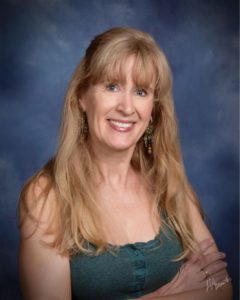
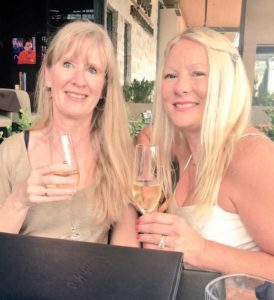
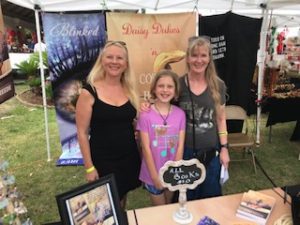
FQ: Blinkedis a book co-written by two authors. Why did you decide to write under a single pen name, rather than have both your names printed on the cover? Author Minette LaurenAuthor Zoe TasiaZOE: I think we both value our privacy, so we planned on writing under pseudonyms when working on our own books. I guess we could have used Minette Lauren and Zoe Tasia, but I really liked the name Zari Reede and for a reader looking for our books, remembering Zari Reede is much easier than remembering two names.
MINETTE: I know it sounds terrible, but I probably wouldn’t read a book with two author’s names on the front. I never considered using both names. I loved the name Zari. It was one of Zoe’s Characters.
FQ: As a two-person writing team, after writing three books together, what are some of the challenges you’ve faced in writing collaboratively? Does your teamwork make any part of writing easier?
ZOE: I’ve learned if I have a certain idea I really want to write about at a later point in the book, I better bring it up soon, because it may not be possible depending on what Minette writes next. We both have great imaginations and can come up with some pretty wild story twists. Writing together challenges and pushes me. I find that I take more risks when writing as Zari Reede. Co-writing is fun and much easier than writing alone. I don’t think I’ve ever had problems with writer’s block when working on a Zari Reede book. Wish I could say the same about my solo projects.
MINETTE: Zoe and I have very different reading taste, so finding a story we both want to tell is sometimes challenging. Editing is always a difficult process, but It’s nice to have back up. It takes me twice as long to write a book on my own, and co-writing holds me accountable for getting the work done.
FQ: Many fantasy novels published today are dark and serious but Blinkedis laced with humor. How do you find the comedy in your writing? Do your senses of humor differ from one another?
ZOE: I’m a firm believer that you can find humor in almost situation. I’m a bit of a social klutz and major nerd, so often when I develop comedic moments, I draw upon that. I sometimes throw Minette off with some of my geeky references, but I think we find the same things funny generally.
MINETTE: Zoe is being kind. She has a far better vocabulary than I do and an uncanny memory for details and facts. Sometimes I have to use google to investigate her meaning. She is hilarious and makes me laugh out loud when I read her scenes, but she is a closet comedian. People who know her would be surprised by her imagination. I always try to work a little humor into our stories. Sometimes it becomes a competition over who can write the funnier scene. Even our Mystery-thriller has a few chuckles.
FQ: What is one element (a character’s personality, setting, voice, etc.) that changed between drafts of Blinked? Why?
ZOE: Timing was really hard to keep track of as we moved between characters and worlds, so I know we had to make changes there.
MINETTE: Ugh, the magic! The witch was taxing for me. Zoe was a stickler for rules in fantasy, and I’ll be honest when I say, I never quite understood the rules. As a result, I probably wrote more Mindy, Jim, Reggie and Rapunzel scenes.
FQ: Is there any story behind the pen name “Zari Reede?”
ZOE: I went through my World of Warcraft account. I have one character named Zari and one named Reede. The names worked well together.
MINETTE: Zari was a character in Zoe’s familiars’ book. I had never heard the name before and thought it was different. Reede was like read, plus my sister, who was a writer,said she would write under the name Freede. I liked the similarity of it.
FQ: What does your writing process look like? Does it change with every book?
ZOE: We take turns starting stories and usually end up writing about 1,000 words before emailing it back. I don’t think it has changed all that much.
MINETTE: I love the spontaneity we start each story with, writing by the seat of our pants. About half way through, we meet up for a champagne filled lunch meeting and discuss where we are headed. After that, the cards all fall into place. I miss the writing when we finish a story together. The editing is a bear.
FQ: When a character “Blinks” in your novel, they exchange places with an inhabitant of the mysterious world Ortharos. How was this interesting idea initially inspired?
ZOE: I knew I wanted us to write a fantasy book next and I knew I wanted to yank the reader into a dramatic moment with the first line. So, as authors are wont to do, I played the what-if game and came up with the first line of the book. “I went to bed with my husband and woke up with a monster.” Then I had to ask myself, how did a monster get in bed with her without her noticing? And that’s when I came up with the concept of Blinking. From that point, Minette and I elaborated and that first line grew into this zany book.
MINETTE: We always take turns starting the stories. Zoe gets credit with Blinks’s beginning. We did have to meet once or twice to flesh out the particulars so that we both understood the balance between worlds.
FQ: Is there anything that you’ve learned from each other while writing together? If so, what?
ZOE: I learned that Minette is very much a pantser. As a plotter, I worried about how that would translate into a cohesive book. There are the occasional growing pains, but so far, the books have surprisingly come together with ease.
MINETTE: Co-writing is like literary chess. It’s an addictive game, but it takes two writers that play well together. It’s not always easy to agree and share the same vision of the story. Compromise is the best and the hardest part of the equation. We have both let go of scenes that ached to delete, but we can agree later that the book was enriched by the sacrifice.
FQ: If you could offer any advice to young writers who want to collaborate on a project, whether it be a book, short story, or other form of fiction, what would it be, and why?
ZOE: One of my favorite authors is Ilona Andrews. Ilona Andrews is a writing team consisting of a married couple. I love my husband very much, but I fear such a project would put much strain on our marriage. Prior to becoming published, I thought co-writing would be very difficult. After all, most writers do write alone or only co-write on the one-off project. Minette and I didn’t set out to write a book. That a writing exercise ended up becoming a novel, was a happy surprise, certainly to me. My advice is not to be afraid to collaborate with another author and be aware that different authors approach it in different ways. Experiment and do what works. You’ll never know if co-writing is right for you unless you try.
MINETTE: It’s great fun and easy to write with someone you know and trust. However, it’s not for everyone. I can’t think of one other person I would want to share this journey with. My husband is my best cheerleader, but as Zoe said, I wouldn’t want the added friction of writing disagreements weighing down our daily lives. Zoe and I live an hour away from each other. It’s a good buffer for co-writing.
By: Katie Keridan Publisher: CreateSpace Publication Date: November 2018 ISBN: 978-1727705386 Reviewed by: Anita Lock Date: December 19, 2018
Rising storytelling-poet Katie Keridan reaches out to her audience as she bares her soul in her unique work, Once Upon a Girl.
Keridan opens with a nameless poem that reads:
I crumble under the weight of this pain except…I don’t I just wish I could
And then closes with an eye-popping commentary:
(what is the proper response for when the spouse you were in the process of divorcing commits suicide?)
Perking the interest of readers from the get-go, Keridan will not disappoint her audience since her poems do much more than explain her seemingly dark writing style. While the outpouring of words, no doubt, reflect a painful past, Keridan chooses to let vulnerability and transparency be her guide as she peels back facades and exposes the truth about herself, her suffering, battling with low self-esteem, and the process she’s taken to reinvent herself.
Keridan’s near 200-poem collection is exceptional on many different levels. Most prominent is her E.E. Cummings-approach to writing, which is marked with lowercase letters with minimal punctuation, and set to freeform with a light sprinkling of haikus. With no table of contents and very few titled poems, Keridan has the freedom to also reinvent her poetic approach, which functions more like a storytelling journey that chronicles her experiences.
Much of Keridan’s poetry, like the opener mentioned above, have no titles and include commentaries which offer clarity to her poems that are replete with many low-self-esteem-related themes. While general topics cover relationships, love, marriage, others get more specific, such as abuse, bulimia, self-mutilation, stolen childhood, and unconditional love, to name a few. There are inferences, too, such as codependency in relationships. Plenty of metaphors are sprinkled throughout as well. One that stands out is fire, which Keridan explains in one of her commentaries as relating to her.
A handful of poems that actually have titles made their first appearances in other sources such as “Soul Recognition” and “My Moment” in The Sand Canyon Review 2018,“The Truth of Always,” “Interludes,” and “Different and Never Enough” in Inquietudes Literary Journal 2018, “Hotel Room” in Madness Muse Press 2018, and “Space Between” in On Arrival through Eber & Wein Publishing.
Keridan’s words are straightforward from beginning to end—a reflection of the promise she made to be true to herself. But her poems serve a purpose beyond self-expression. Her hope to her readers is this: “May you know that you are not alone in how you feel.”
Quill says: Once Upon a Girl sends a powerful reminder that there is hope in the midst of hopelessness.