Thursday, June 9, 2022
#BookReview - Mindbender by Avinash Naduvath
#AuthorInterview with Patrick Scott, author of Unburied: The Loci of Power Series, Cycle 1
Today, Feathered Quill reviewer Katie Specht is talking with Patrick Scott, author of Unburied: The Loci of Power Series, Cycle I.
FQ: What was the inspiration behind the story of Unburied?
SCOTT: As I prepared my debut novel Big Beasts for release, I felt a strong urge to explore a new character and world. I began with a modified version of the scene which opened the book and got hooked by wanting to know more about everything. From there, the story blossomed into the strange and mysterious world it became.
FQ: Can you share a bit about your professional background and how you began authoring books?
SCOTT: My path to storytelling is familiar. I was one of those kids lost in my head and telling myself stories. I started writing longer and longer things in college. After a particularly short story I let my roommate read, I heard something I hear quite a bit when working in smaller chunks. “I want to know more,” my roommate said. I wrote my first novel and never looked back.
I’ve been working on my craft since then. I’ve won some small contests and placed some short stories. But mostly, I ended up playing in bigger worlds. While content to create, I fortunately submitted what I thought would be a standalone novel, Big Beasts, to Atmosphere Press who saw something in my work which spoke to them and their readers.
After the first novel came out, I approached them again with two things, a sequel to Big Beasts and the opening to the new series which Unburied begins. We agreed it would be fun to put out something new and different to connect with a different audience
FQ: What was the writing experience like for you as you wrote this story?
SCOTT: I marveled at how big everything grew. It all started with something simple. The longer I stayed in the world the deeper I realized things went. I joke all the time that it’s so hard for me to pick the good days of writing from the bad days because in the end it’s a bit like running a marathon. You’re done and you’ve accomplished something and all the moment-to-moment things fade into the background. I guess that’s what made me decide to tackle everything that I’ve set myself up for.
FQ: How did you develop the main character of Faye? Is she based on anyone you personally know?
SCOTT: I’ll answer the second question first. Faye is not a single person. All characters, from Faye to her roommates and Moira, are everyone that I’ve ever met and no one that I’ve ever had the pleasure of meeting. Faye’s key talents, personality and outlook came from the very first time I wrote her. Granted, she changed over the course of the process as I discovered how deeply she had been harmed and the things she did to protect herself. But Faye was Faye from the start. Seeing her solidity in the first draft and how she interacts with the world is so rewarding as a writer.
FQ: When you began working on this series, did you have the entire story developed in your mind or has it come to you gradually as you have been writing it?

SCOTT: About halfway through Unburied, I figured out some key things about the story. That’s when everything opened up to me including how deep the rabbit hole went. When that happened, I got both excited and a little scared because I knew that Faye’s story was just the opening, like the first few notes as the orchestra plays the prelude. At that point, my multiple notebooks and files came into play capturing as much as I could.
FQ: The name of the series, Loci of Power, is rather unique. Can you share a bit about how you developed the title and the meaning behind it?
SCOTT: As with so much that happens, the series title came from so many different things landing at the same time and melding into something which struck me in a particular way. First, there’s a psychological concept referred to as the Locus of Control and this impacts our interaction with the world and how we move through it. In developing the characters and magic for the series, I realized control might not be the only thing which has a locus in someone. In short, the magic is seated in individuals, manifests uniquely and is necessary for their lives, in the present and going forward. Thus, the Loci of Power was born.
FQ: Are there any lessons you are hoping to impart to your readers with this book and/or the entire Loci of Power Series?
SCOTT: Lessons might be too lofty a term. In the first book, I did want to address something we all face. Unburied looks at how people have things they pretend have no impact on them or their lives. These events can be positive and negative, but more often than not it’s trauma we seek to keep buried. I hope the book will demonstrate how keeping things covered rarely brings about the health and healing we truly need.
As far as the series, I’m not sure we’re to the point where I can address overall themes. I mostly hope, as with the first book, to tell an exciting and layered story about individuals who are fighting through and making sense of things. We’ll see where we end up in the last book.
FQ: Can you share a bit about the development of the integral character of Moira, Faye’s mentor?
SCOTT: When I started writing Moira, I liked that she seemed full of knowledge, wisdom and a life of her own outside of how she interacted with Faye. I sought to make her a mentor, but one with flaws and secrets. Too often in our tales, we accept the wise figure almost without question. I wanted the readers to like Moira and understand her place in Faye’s life while going “there’s something different about her” at the same time. I hope I struck that balance because she’s a rich and amazing character to write.
FQ: What is the relevance of the subtitle Cycle 1 and how did you develop it?
SCOTT: Realizing the scope of the series, I understood things would be easier for readers and myself if I were to break the series up into cycles. The plan lies in making sure that each cycle carries us to the satisfying conclusion of an arc. From there, we’ll enter the wider world where greater things will be asked of our cast of characters in each successive cycle.
FQ: Would you share with our readers a bit about what they can expect in future books in the series?
SCOTT: While avoiding any major spoilers, I will say I’ve drafted the next novel and have begun my first round of edits. Faye’s in the sequel and plays a key role. However, the sequel is not her story. I created Cycle 1 to have four novels about each of the roommates – Faye, Cho, Ari and Nena. Their tales, while building on one another, will give readers a glimpse of how things like family, life and magic are uniquely expressed and lead toward a much larger threat.
Sunday, June 5, 2022
#BookReview - Transcendence: A Woman's Guide to How to Heal, Discover Self-love for Better Health, Happiness and Abundance
Transcendence: A Woman’s Guide on How to Heal, Discover Self-love for Better Health, Happiness and Abundance
#BookReview - Keeper of the Mirror: The Portly Lady
#BookReview - River of Ashes by Alexandrea Weis and Lucas Astor
Thursday, June 2, 2022
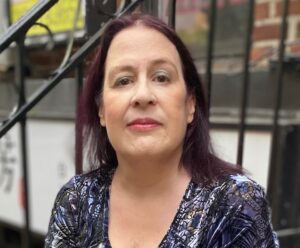
#AuthorInterview with Robin D'Amato, author of Don't Poke the Bear
Today, Feathered Quill reviewer Kimberly Trix Lee is talking with Robin D'Amato, author of Don't Poke the Bear.
FQ: According to your profile, you moved to New York City, fell in love with it, and never left. If you could only pick one, what’s your favorite thing about New York City?
D'AMATO: The variety of people. Everybody has a story, and there are millions of them intertwining in the City every day. Sometimes I like to sit on my stoop and just people-watch.
FQ: I’m curious about your inspiration for the characters in this book. Could you tell us more about this and how you developed them?
D'AMATO: As this was the first novel I ever attempted, these characters were based on people I used to know in the 90s. I knew I wanted to write about New York City (“Write what you know”), and the biggest changes in the City for me were happening in the 90s. I picked people who I thought had the most interesting stories and tried to make a book about them. The individual characters are composites of more than one person, but the inspiration came from real people and some actual events. The book is full of “Easter Eggs” for people who lived through the 90s in New York City.
FQ: Among the three main female characters in this story, is there one you can relate to the most? Which one would it be and how so?
D'AMATO: I would say Allie is the character closest to me, which is probably why I decided to make her the central character of the three. Her thoughts and sensibilities are similar to mine, including her taste in music. I ultimately put more of myself in her as I went along. She was a great mouthpiece for my opinions, even though she had her own agenda at times.
FQ: How long did it take you to develop this story from start to end? What was the most challenging aspect?

D'AMATO: This book was eight years in the making, not including a break of a couple years I took to write Somebody’s Watching You, which actually came out first. My rough draft was really sketchy, and I started to add characters and scenes to make it more interesting. What I got was more interesting, but the timelines were all off. Because I didn’t write this linearly, scenes were out of order, things that should have happened in sequence were overlapping, and the flashbacks were confusing. It took a long time to organize all the different elements into something cohesive.
FQ: The women in the book were all involved in relationships that don’t really allow them to grow and develop, whether he’s a junkie or a serial cheater or even someone who’s just not pulling his own weight in terms of financial responsibility. Is there anything you’d like to say to women who are currently in relationships like these?
D'AMATO: I know several women in relationships like these, women who become the caretakers in all aspects of their relationships. I often wonder if it starts out as a fear of losing their partner if they don’t give him enough, then turns into something they can’t undo. I would say relationships work best when they strive to find some balance, as cliché as that might sound. Both partners should take care of the other—maybe not always equally, but shared caretaking over time.
FQ: Every single one of us is a product of our past. Pest was especially molded by his traumatizing childhood. Do you believe that there could be a way for him to free himself from his past?
D'AMATO: I think, rather than free himself of his past, it is more a matter of recovering from his past. His past shaped him into the survivor he is, which is a large part of his personality. But recovering from the worst aspects of it could help with his decision-making processes and life choices, not to mention how he reacts to stressful situations. I think over time Pest would learn some better coping skills, as he is a character who, despite his outbursts, is self-aware.
FQ: Allie’s issue about “having a thing for rabid dogs” is a real one. I know people who have been in bad relationships with toxic men and they now believe that they just attract the worst men. What are your thoughts on this?
D'AMATO: On the surface, men who have a lot of baggage seem more interesting and are often irresistibly charming. As much as Allie didn’t like the furniture salesman because she didn’t want to be bored, she found Pest fascinating, and not just because he was talented. There is something between furniture salesman and Charles Manson, however. Allie was well into her thirties before she figured that one out.
FQ: Let’s talk about Natia’s mother. She wasn’t a bad person. She only wanted the best for her daughter and I can imagine that after seeing that Natia was living in a cluttered apartment in a shady neighborhood, as a mother, she would want her daughter to get out of that area. Tell us a bit about your thoughts on this.
D'AMATO: Natia’s mother did mean well, but her style of taking care of the people she loved was to control all aspects of their lives. Meanwhile her daughter was impulsive and determined, which created a huge conflict between mother and daughter when they disagreed. It would be a shock to any parent to see their child living in squalor, but other parents might try having a discussion, or maybe offering financial assistance, but in any case, would keep the lines of communication open while they were busy worrying. Natia’s mother didn’t like what she saw and simply turned on her daughter. When Natia’s mother couldn’t control something, she’d simply attempt to get rid of it. Acceptance wasn’t even considered.
I think this happens with a lot of parents when faced with unpleasant truths about their child. Maybe the child doesn’t want to go to college, maybe the child is gay, maybe the child is transgender, maybe they want to join the circus. Some parents would rather cut off the child, maybe disown them, rather than deal with an unpleasant truth. This is what Natia’s mother was doing.