Friday, February 22, 2019

#BookReview - The Making, Breaking and Renewal of a Surgeon-Scientist

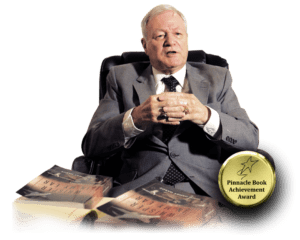
The Making, Breaking and Renewal of a Surgeon-Scientist: A Personal Perspective of the Physician Crisis in America

By: Steven E. Wilson, M.D.
Publisher: H-G Books
Publication Date: January 2019
ISBN: 978-1732915145
Reviewed by: Amy Lignor
Review Date: February 19, 2019
We hear all about the “best of the best,” the ones behind-the-scenes who work themselves silly to make sure the rest of us are okay. We see ads about them on TV; the ones who run into emergency situations every day. If we don’t know them personally—if we never need a first responder or doctor/surgeon for an emergency—then we are not only lucky, but we also will never know their dedication, the work they did to get where they are, and the endurance and determination they have within them to make things better for those in need.
In this autobiography written by one of those very determined people, readers are provided with a narrative that brings to light his own struggles that he had to go through in order to become the physician that he’d always dreamed of being. As a young man he had a plan, and even though hard work and hard roads stretched out before him, he achieved his goal and became one who could claim the mantle of being an “incredible” eye physician/scientist of his generation.
The hard road experienced as a kid, however, was not the last one he’d have to traverse. This narrative takes the reader on a journey that goes into “The Big Easy,” the Cleveland Clinic, Seattle, and more, even offering a door into Dr. Wilson’s job as chair of ophthalmology at the University of Washington. The latter was the scene of three physicians who were held out to dry during what the author calls the “whistleblower-initiated federal Medicare/Medicaid fraud investigation” that went on there.
Hard roads do not only describe health and wellness emergencies; in fact, the good doctor brings to light some of the fiercest issues that were born when bureaucrats, people with the title of “Administrator,” and federal prosecutors took the low road and tossed a veil of evil over the decent world of medicine. The American medical system gets hits each and every day. Journalists, newspaper accounts, blogs – all tell stories that address the healthcare concerns in this nation, the plight of the medical men and women who are just trying to do their jobs, etc. And although TV commercials honoring those heroes are fine, backing that up with respect for their careers and the work they have done is also necessary.
This book does well because it offers a view and perspective that allows you, the reader, to form your own views and make sure that the medical world does not go the way of the dinosaur, as politicians and others continue to taint it in various ways. Although this book is a “must read” for the wonderful people out there who wish to take on medicine as a career, it’s also one for people who wish to see a fulfilling career first-hand, and witness how good intentions can at times be twisted to receive negative consequences.
This author has written award-winning fiction (i.e., The Stone Waverly Trilogy), and this particular release allows his fans and other readers to see inside the mind of a truly intelligent man who wishes to create a good road for others to travel.
Quill says: This personal journey offers up humor, success, drama, trauma, and a learning experience that all should have.
For more information on The Making, Breaking and Renewal of a Surgeon-Scientist,please visit the publisher's website at: h-g-books.com

#BookReview - Copywrite God and Me

Copywrite God and Me: Lyrics from a Collection of Inspired Songs

By: Christina Nordstrom
Publisher:
Publication Date: 2018
ISBN: 978-1-38-831490-3
Reviewed by: Barbara Bamberger Scott
Date: February 19, 2019
Christina Nordstrom is a singer/songwriter who often finds inspiration in mystical circumstances, described here in charming narrative.
Lyrics to ninety songs with accompanying narrative are presented in this fascinating look inside the thinking processes of a performer, much of whose musical endeavors have a charitable purpose. Most show an active faith in God and in the mysterious creative process, the lyrics seeming to the author to come from somewhere outside herself. She sees herself often as just the transcriber. Thus it’s fitting that the first song in the collection is called “Thank You for the Blessings”:
Thank you for the blessings of this life
And the promise that your peace will bring!
May I live a life that’s worthy of your song –
To your melody my voice will sing!
“Voices of the Mountains” shares the writer’s experiences on work-study trips to El Salvador and her realization that one’s tears are a sign that love is there amidst poverty and political strife. The lyrics are a paean to her companions: campesinos, common people who were crushed beneath a lie.
“Lessons from Shoes” recalls her father polishing the children’s shoes before Sunday school (Dad, thanks for the shoes and what it took to fill them). “A Special Kind of Love” was written for friends getting married, and, the author states, for “any two people who committed their lives to each other.” The song “Mending” underscores the need to learn to apologize and ask for forgiveness, while “Find Your Way Back Home” expresses Nordstrom’s frustration when, as a child, she was told by a music teacher that she must not use her natural voice, and how she overcame that negative message:
When I was a child I spoke as a woman,
The songs that I sang were just not my own...
...Claiming your purpose depends on your will.
A particularly moving offering is a song in the “protest” vein, referencing the ”Orphan Train” initiative of the late 19th-early 20th century that transported homeless children from cities to work for farm families on the Great Plains. Nordstrom characterizes the memories of one such child: As the train pulled out trembled to the cadence of the wheels below. “The Lord’s Prayer in Blue” is an unusual number, showing clearly that connection between the author and her creative promptings, in this case almost a direct message, from God. The song is a slightly reworded blues version of the famous prayer, as it came to her in the wee hours of the morning.
Nordstrom refers to her folk genre songs as “co-creations,” many of which are infused with the spirit of “giving back” that springs from her work in community health and her travels in some of the poor countries of the world. 
Quill says: Nordstrom’s book of songs and the stories behind them will be appreciated by and shared among other creative artists, especially those whose work is faith based. 
For more information on Copywrite God and Me: Lyrics from a Collection of Inspired Songs, please visit the author's website at: www.chrisnordstrom.com

#AuthorInterview with Michael A. Greco @Mike12854850

Today, Feathered Quill reviewer Amy Lignor is talking with Michael A. Greco, the author of The Cuckoo Colloquium: Getting Lost to Find Yourself.
FQ: What is it like to travel to other regions of the world? Is it from your travels that your ideas for books come about?
GRECO: I’ve lived in Japan, off and on, for twenty-five years. Because of its location, the country has served as a convenient springboard off into other areas of Asia. The Cuckoo Colloquium comes from several visits to Indonesia and Malaysia.
My third book, Plum Rains on Happy House, is all about the Japan experience—the distinctive culture and the puzzling language (as seen by an adult trying to learn it).
A big part of my fourth book, Project Purple, comes from my experiences living in Russia (then the Soviet Union) as a student in the 80s.
Two other books are uniquely American, where I try to dig into the roots of American culture: Moon Dogg, my second book, is a story about a man’s murder in the Sonora Desert and his subsequent reincarnation, though the spirituality of Moon Dogg comes largely from the legends of the Tohono O’odham Nation who live there.
My latest project, Assunta, (books 5, 6, 7) takes place in south Texas, and is a three-part trilogy about a man who comes to believe in the divine. It’s a physical and spiritual journey from the gates of Hell to the highest portion of Heaven. The story is built on a framework of references to the great poem “The Divine Comedy” by Dante Alighieri. There are three books: InfernoPurgatorio, and Paradiso. I’ve just finished Book 3, and will publish them in one-month intervals, starting in early March with the first Book, Assunta: Inferno (though a preliminary copy of Inferno is up now on Amazon)
So, yes, I am influenced by my environment to some degree, but the stories I want to tell about the human condition can take place anywhere. There’s no getting the American-ness out of me.
FQ: On the same note, is there one “most memorable” location that you literally can’t stop thinking about; one that perhaps inspires you each day?
GRECO: Tough question. I know I’m still drawn to the rain forest, and that’s probably the reason why I believe the Cuckoo Colloquium, as a story, still has plenty of gasoline; I will take the characters from books I and 2 back to the rainforest to explore what generates the cuckoo shrike as a force of magic, and how it all began.
I have lasting impressions of a time I spent in Tibet, and I’m hoping to use that as a background for a future story, as well as the rain forest of New Guinea. But I’m just as drawn to the Sonora and to the cultures of Native Americans; I believe they hold as much rich mystery as any place on Earth that I’ve traveled to.
FQ: You have an amazing background, both living in Asia, and teaching writing in a university there. Are your students an inspiration for your characters?
GRECO: I’d have to say that, yes, my students are an influence on how I create characters. Pinky Bell in The Cuckoo Colloquium is, no doubt, some amalgam of the thousands of Japanese students in my classrooms over the many years. The comedy Plum Rains on Happy House, about an American living in a rundown guesthouse who tries to turn the place into an English school, shines an absurdly exaggerated portrait of the teacher-student relationships in Japan.
FQ: Where and how did the The Cuckoo Colloquium come to be? 
GRECO: The Cuckoo Colloquium started in 2010 while I was trekking in Sarawak. I have travelled a bit in both Malaysia and Kalimantan and really wanted to write a book on the rain forest. I'm fascinated by the profound depth of the jungle. The first time I camped in Kalimantan was in the early 90’s (before e-mail, before pocket phones.) I’ve hiked and camped in Kalimantan several times since, as well as Sarawak and Sabah. Trekking in Sumatra, Java, and Sulawesi also gave me a good feel for the rain forest.
I’ve been to the orangutan rehabilitation camps on Kalimantan and on Sumatra, as well as tarsius reserves on Sulawesi. In the story, we get close up and personal with the birdlife (the cuckoo shrike, of course) but also pythons, leeches, tarsius, proboscis monkeys, pygmy elephants, sun bears, and a rather unique animal I call the donkel (donkey meets camel). There’s one reference to an orangutan, but he’s just passing by, frightened of the datuk
The datuk is the element of fantasy I bring to the story—in the form of the cuckoo shrike. The idea of bestowing the cuckoo shrike with magical properties came merely from the name cuckoo shrike. What better creature to create all the mayhem than a cuckoo! Its diminutive plainness was also a charm point—no flashy colors, no striking call, just an ordinary, mild-mannered blue-grey bird.
In the first chapter, Windy, the American teen, comes across an ominous leaflet that says: Cuckoo Camp personal Growthing Adventure to the End. This is apt foreshadowing—the end, as in death.
The forest colloquium hosts six teens who get lost in the rain forest of Sarawak. In order to survive, they need to draw on what the camp refers to as the ‘strategies for survival’: interdependence, unselfishness, fellowship. Or they die.
The teenagers are either selfish or spoiled, or both. I love them; they are rich with possibilities. It’s a tough love colloquium—they are abused, to some extent. But they learn something. They come away from the experience better people.
Each chapter is written from the perspective of one of the six teens, or from their elderly chaperone, Pete. The theme is about being lost—and being lost physically would have its metaphorical counterpart, that of being lost on the inside. In order for the lost group to find themselves physically, they have to first find themselves in a metaphorical sense.
Is it a story for young adults? Well, with the exception of old Pete, it’s certainly about young adults. Is if for them? I’ll have to let readers decide.
The story has got a whole lot of jungle. From the first to last page—jungle. What is it about a jungle? — The danger, lots of it; the primordial mystery of the dark unknowing, the pressing in; it impairs our vision, which is a huge part of our ability to understand our surroundings. It leaves us vulnerable.
So many ways to never be seen again.
It’s also itchy, mucky, steamy, and as the old Tarzan movies showed us, there’s a good deal of quicksand, just waiting to suck us all down into the center of the earth. Most of us have some kind of fascination with the jungle. With the tunnel of foliage, with the impossible labyrinth that it is.
Did I succeed in capturing the essence, the life force of the rain forest? Not sure. A constant nag goes as follows: Damned, I need one more trek to get that last feel, the finishing touches!  But then I realize I’ve just finished a novel about a supposed forest in Africa, and the writer never once described that forest. In Brian Katling’s The Vorrh, he never once described the flora of the mystical place (I think there was perhaps one mention of the word oak). So the whole forest was more metaphorical than real.
If I was writing a story about a jungle, but with no reference to the actual plant or animal life in that jungle, I would have a very bad story. A cardboard-nothing story. The jungle is a character. It is the antagonist in the story. Of course, Mr. Katling omitted direct references to the forest intentionally because he was after something else entirely. But I can’t get away with that.
But just as quickly, a contradictory thought: Oh, my God, have I put in too much? Have I gone jungle mad? Is it malaria of the keyboard? Who's going to want to read 40 chapters of jungle? Readers will look away from the book and see green walls! I then began structuring bookends: to place the first act in the city, than move to the rain forest in a long second act, and then go back to the city for the conclusion. Yeah, that would be smart…
PHHHHT! I went all-jungle. 100% unadulterated rain forest. I want readers to itch, to feel the muck in their shoes, to sweat along with the clammy humidity, to sense the snake slithering under the bed.
FQ: Readers love to know what a writer’s day is all about. When you sit down to put your words on paper, what is your “Writing Day” like? Do you create in a specific place? Do you plan everything ahead of time, or do you fly by the seat of your pants, so to speak? Is music in the background, or perhaps your cat is sitting beside you? Give us a peek inside a Michael A. Greco writing day. 
GRECO: I started writing late in life, in my fifties. I wasn’t ready when younger, wandering half-baked for the longest time, unable to express myself through prose in any real way. I write now because I can’t not write. Just ask my family: If I’m not plugging away at something I’m not much fun to be around. When not teaching, I give myself the time to write, usually in the morning.
I write for myself, not for the market. I have no idea what will sell, but as long as I’m happy with a story, I will show it. I don’t know if I’m going to make any money doing this, but I don’t write to get rich. I do it for another, deeper satisfaction. I also write for the person I know best: myself.
I write alone, upstairs, with Internet jazz radio for company. The family cat, Howard, bounds in and out. I’ve never taken a writing class. I wouldn’t know a support group from an A.A. meeting. I don’t know what a writing retreat is (though it sounds restful).
I have friends who will read stuff for me (I often repay with tacos, or mezcal, or something similar). I have an editor who lends me his professional eyes when he can. I Fiverr for book covers and for formatting. No self-publishing workshops for me (even though the half-day sessions are only 79$—and what a great way to get yourself out there. What’s wrong with me?)
I just work alone because I like it, and I do what Gene Fowler once said: “Writing is easy. All you have to do is sit staring at a blank piece of paper until drops of blood form on your forehead.” 
As for the writing, well, my stories start out as ordinary beans (I like to think of them as such). I don’t know what I have, but I’m compelled to water these beans. Shoots then grow into stems and my beanstalk matures. Sometimes the stems die; the story loses life. Then I travel along my beanstalk and find new stems to explore. Eventually leaves grow and there is a flowering, as the organism that is my story comes to life, and the characters take shape, and I can see them and hear their voices. Then they grow up and go off and do things I haven’t planned.
The nerve!
That’s how I know I’m getting somewhere.
If I think I’ve got something special, I revise. Then I revise more. Then I revise even more. In my experience, the story always gets tighter. It always gets better. My professor at UC Irvine once told me that, in order for someone to be considered knowledgeable about any given subject, they need to have read at least fifteen books on that subject. He actually gave a number: fifteen.
I like it. I have been revising fifteen times, in his honor. In order to show a glimmer of  knowledge on a subject, I aim to read at lest fifteen different sources on it. That’s what it takes—fifteen. Because he said so.
If someone tells me they've finished their novel, I want to ask "How many drafts?" If you haven't rewritten the story at least half of my accustomed FIFTEEN, then, sorry, you're stuck with unripe beans.
As a draft develops, I steer clear of predictability. My stories have frayed edges. It’s like a tale you tell in the kitchen, one with slipups and repetition. It’s genuine. A story should feel like an off-the-cuff conversation with loved ones. Endings can be ambiguous, sometimes unsatisfying. Just like real life. Just like people. There is no black and white. We are both good and bad.
I often don't know what my theme is until after several drafts of the story. Then it emerges as if stepping out from its hiding place in the woods, and I think, "Oh, I've indeed written about that!"
I like to write horror, but I’m not a horror writer. Steven King said, “The thing under my bed waiting to grab my ankle isn’t real. I know that, and I also know that if I’m careful to keep my foot under the covers, it will never be able to grab my ankle.” I am fascinated by this kind of inner beast that resides within so many of my favorite writers. Whatever resides within me is nothing more than a surly Chihuahua.
Comic fantasy is more my game, and if I’ve watered my beans in the right way, then maybe I’m able to spark some kind of emotional connection with readers.
Way to go, you gorgeously crazed beanstalk!
FQ: If there is one author you could sit down with (alive or dead, but they would be alive at the sit down) who you would love to talk to about their books, who would it be and what would you most want to know?
GRECO: I’d like to have breakfast with Mark Twain. But I might have more in common with Kurt Vonnegut, who I see as a postmodern Mark Twain. So, I think. Lunch with Vonnegut. His work has been labeled black humor, satire or science fiction. He exaggerates all the absurdities of our own world. He makes sense through humor.
I believe that memorable characters make memorable tales. So, for dinner, I’ll take Samuel Becket, who shows us lunatics in trashcans, or characters who set themselves on fire. He had great insights into what is true, and he makes it funny.
I think that’s my job, my goal—to write characters and stories that are absurd, violent, childish, but that resonate with truth.
FQ: What do you feel about the YA industry today? Do you believe it is rising in popularity, falling, or staying the course when it comes to new releases?
GRECO: This is a difficult question for me, as I’m not entirely sure The Cuckoo Colloquium meets satisfactory YA criteria. I actually had adults in mind, but as the story developed, I realized that teenagers would really bring out the absurdity of their horrific situation. So, I guess, I’m hoping your readers can tell me? Is this a book for teenagers, or is it merely a book about them?
I really don’t know the answer.
FQ: Is social media harming or helping the author nowadays? If there was one piece of advice that you could give an up-and-comer about what NOT to do to become an author, what would that be?
GRECO: As a Boomer, I’m not all that adept at social media. I do use Facebook and Twitter, but this is a learning process for me. Technology trips me up and I can spend a whole evening fumbling about, trying to link something to something else. I’m waiting on my ten year old to get a little older and savvier with the workings of the Macintosh.
If I had to impart advice to someone starting out, I would probably tell them not to do what I do. Don’t stay home—get out, get your face out there. Get on all the social media; don't be paranoid about people trying to rip off your material; they won't (no thieves are that interested—in my experiences). Get on Tablo or Wattpad, and meet people, read their stuff, give genuine feedback to them. That's how you get a following, and many of these people will follow you over to your website when you start that up. But you have to keep doing that, keep reading the works of others, giving constructive feedback, of course.
FQ: Lastly: Why comic fantasy? And…is there one genre that you have not dove into as of yet that you would like to try one day?
GRECO: The project I’m on now, book 3 of the Assunta trilogy, will go to editing soon. It wanders a bit from the genre of comic fantasy—its a lot more horror than comedy, but I feel it was important to get these dark streaks out of my system. I will publish Assunta in one-month intervals, starting in early March with the first Book, Assunta: Inferno.
After the trilogy, I’m returning to sequels of The Cuckoo Colloquium —about the six teens lost in the rain forest of Borneo—because the characters have so much depth and the story so much fuel remaining. I hope to have book #2 of what I’m calling the Cuckoo series out by autumn, 2019. I look forward to tearing back into comic fantasy. Humor with thoughtful undertones. Visionary. Metaphysical. Childish.  But I’m not for children.
My sub-genre might be: weird fiction. But Amazon has yet to make a category for that. In my writing, the characters take a beating; they earn their end goals. Comic fantasy—weird fiction. I think I’ve found my mission.

#BookReview - What Does A Police Horse Do?

What Does A Police Horse Do?

By: Ellen Feld
Photographed by: John Cebula
Publisher: Willow Bend Publishing
Publication Date: February 2019
ISBN: 978-0983113898
Reviewed by: Amy Lignor
Review Date: February 22, 2019
In this world we talk a great deal about honoring and respecting—not to mention, thanking—all the hard work done by the police, firemen and women, and first responders. These people do their very tough jobs on a daily basis so that we can be protected. This is a very good thing; in fact, it is something everyone should do as often as possible. And this book not only reminds us all about the officers of the law and the difficult work they have, but it also opens up a brand new door to both kids and adults when it comes to the very “large” officers who just happen to own beautiful brown eyes, amazing coats, and have an affinity for the occasional apple. They are also the ones that kids absolutely love to get their pictures taken with. 
Need a hint? Not a problem. Introducing...Liam. Liam is a police horse who wears a real badge and has the job of serving and protecting his area of the world. Living in Lancaster and being an officer with the Lancaster, Pennsylvania Mounted Police Unit, Liam is one of the horses who go out on patrol each and every day. His partner is Officer Eric Lukacs, and the fantastic photographs of this memorable team will delight anyone who picks up this book.
Readers are taken through Liam’s day, and are also introduced to Liam’s other co-workers. From Ozzy, Duke and Charlie—his horse friends—to the barking K-9 patrolman named Axel. Through words and pictures we are taught about the type of training Liam has to go through in order to learn how to handle obstacles that may “pop” up in his path during patrol, how dignified he looks as he heads downtown with Officer Lukacs each day, and how various friends and neighbors come up to Liam in order to say “hello” and get a picture taken with him. (Yes, he is the George Clooney of horses.) The book even shows a memorable pic of Axel and Liam greeting each other before the K-9 goes off to work with his own partner, Officer Alexander. 
When it comes to large events, like festivals, Liam shows you the huge benefits of being a horse and how he comes in more than handy when someone might get “lost in a crowd.” Because he’s much higher up than the regular walkers, he and his partner have the benefit of being able to see greater distances and find someone who may need help, while also being able to keep everything running smoothly. He even patrols at night! 
I have to say, as a reviewer who reads a great many books per year, I never thought it was possible to find the “Best of the Year” children’s book this early in 2019. But, after reading this and seeing the amazing pictures of Liam on duty and off, I may have done just that. This is a whole lot of fun to look at and a great deal of fun to share. My granddaughter read it just once and now will not put it down. She even wants Grandma to “find” Liam and put him in my backyard so she can play with him when she visits. Because he’s a police officer, I’ll have to explain to her that luring Liam to New Mexico will probably get me into trouble.
To sum up, there is no better advice to give to readers everywhere than: Read This. Ellen Feld and photographer John Cebula have done an excellent job delivering the best of Liam. This book will not only make you want you to honor all officers every day, but it may just make you buy plane tickets to Pennsylvania so you can meet Liam face-to-face.
Quill Says: An incredible book that will, no doubt, find its way onto every “Best of 2019” children’s book lists.
For more information on What Does A Police Horse Do?, please visit the publisher's website at: www.willowbendpublishing.com

Monday, February 18, 2019

#AuthorInterview with John Henry Hardy @JohnHenryAuthor

Today, Feathered Quill reviewer Kristi Eldridge is talking with John Henry Hardy, the author of The Legend of the Phantom Effect.
FQ:  Did you spend time in the Lubbock or Amarillo area to gain inspiration for the scenery in this book?
HARDY: No, Kristi, but I have been through the area and realized it is rather isolated and sparsely populated north of Lubbock. The park mentioned in the book, Cap Rock Canyon State Park, is an actual park and was an ideal location for the landing site of the spaceships. It also has a buffalo herd, eagles, hares, and cacti. It also marks the beginning of the Llano Estacado-the high plains.
FQ: What was the inspiration for the main character and did you always plan to have him be a reporter?
HARDY: The inspiration for the main character came from a movie I saw many years ago about a reporter, who encountered mystical monsters that were haunting the Earth. But that story  is totally different than the tale depicted in The Legend of the Phantom Effect.
FQ: Did any information or stories from the famous Roswell UFO sightings provide inspiration for this book?
HARDY: No. The inspiration for this book was the knowledge that there are 200 billion stars in the Galaxy of the Milky Way, and by the Law of Probability forty billion of those stars are Earth-like suns. But I am not into monster stories, but dwell on the possible reality of creatures that may have evolved like humans beings, since those forty billion suns are so much like our sun-with some differences of course.
FQ: What was your first step in creating the world of Rau?
HARDY: I studied the constellations from excerpts from NASA and discovered there is a star called Proxima Centauri in the Constellation Centaurus. It is a Red Dwarf Star and a planet known to science as Proxima b revolves around it. I call it Rau in the story, but all its attributes are true facts about Proxima b as taken from my research.
FQ: What was the inspiration for the name Rau?
HARDY: I wanted to keep it simple, and as I was typing a sentence that name just popped into my stream of thought.
FQ: How did you go about creating a world that was different enough from Earth to be intriguing, but similar enough to be relatable?
HARDY: What I kept thinking was; what are the next steps for mankind? I thought about advancements in medicines, and medical procedures; space travel; foods and farming; social relationships; correctional institutions and capital punishment; finance etc. etc. etc. But I also kept in mind the greed, paranoia, sexual mores, and the lust for power that is so prevalent amongst humanity today, and contrasted this to the lessons learned by the advanced civilization that had evolved on Rau.
FQ: What research in astronomy did you do in writing this book?
HARDY: I relied a lot on what was on the internet as presented by NASA and other astronomers. I discovered there is an Earth-like planet that orbits an Earth-like sun in the Constellation Centaurus that mankind has never seen, not even in photographs taken by satellites. We know it as Proxima b and that it exists by it’s gravitational pull on other suns and planets. It’s sun is a Red Dwarf Star-Proxima Centauri, and it is many times cooler than Earth’s sun, but it is much closer to the planet than our sun is to Earth. The same side of that planet I call Rau always faces the sun just as the same side of our moon always faces Earth. These are all true facts and many more than we don’t have the time or room to discuss here, but it is all told in The Legend of the Phantom Effect.
FQ: When writing this book did you picture the ending and then write to that ending, or start from the beginning?
HARDY: Neither, Kristi. I always knew what the middle of the story was going to be about (the discovery of a spaceship by a persistent reporter), and then wrote the beginning, filled lots of material in the middle of the tale after my research, and then thought of the ending that power hungry dictators might pursue.
FQ: You seem comfortable in a wide range of genres (judging by your past books and very positive reviews for those books).  Do you have a favorite genre?  Or find one easier, or more difficult, to write?
HARDY: You know, Kristi, I honestly don’t know! I find it easy to write about war, since I spent more than thirty three years in the US Marine Corps; but the horror of war is not the only thing that can teach us about life. In my book The Place Where the Giant Fell it is about prejudice in pre-statehood Arizona; When Brothers Meet is an account based on the fact that China wants to control the world by controlling the supply of oil; The Day God Played Baseball is a humorous tale that conveys the human urge to lie and cheat in order to win at any cost-and what may happen if you do.
FQ: You’re quite prolific.  What’s next - would you give our readers a peak into your next book?
HARDY: My next book will be quite controversial. It concerns the horrific characteristics of the present day political climate that is plaguing the United States. Some people will love it and some will hate it, but this does not concern me. What does alarm me is the trend toward Socialism, Progressivism, and far left liberalism, which are preludes to communism.

#AuthorInterview with Keith Thye

Today, Feathered Quill reviewer Lynette Latzko is talking with Keith Thye, the author of The Misadventures of Rusty Kenneficke.
FQ: What was the inspiration behind your decision to write a story about someone’s misadventures?
THYE: I had been thinking for many years about some of the incidents that had happened to me over the course of my life, and I wanted to get them on paper before life slipped away any further. It occurred to me that it might make a good story if I could develop a sequence. As a pseudo-comedy, I felt cramming all of them into one disastrous year would set the stage for further books to recapture a reasonable life.
FQ:  Why did you choose the late 1970s as the time period to set The Misadventures of Rusty Kenneficke?
THYE: I was born in 1942 and wanted Rusty to follow my life’s sequence because I was familiar with that time frame. Rusty needed to be old enough to have many of his life experiences behind him (adolescence, school, college, army, career) and yet young enough to have time to get his life turned around. I thought thirty-seven years of age would meet that criteria; hence, it would take place in 1979.
FQ: In the book, Rusty is suffering from writer's block and embarks upon an adventure in the hopes of alleviating this issue. Has there ever been a time in your writing endeavors where you felt stuck, and if so, what did you do to help yourself through the rough period?
THYE: I have no pressure—no time frame—to complete a manuscript. When I get stuck, I get away from writing for a while (days, weeks, perhaps a month). My wife and I talk about options for the next chapter or the direction of the book. Ideas begin to form a pattern, and when I’m comfortable with the next story line, I get back to writing.
FQ: Readers find out early on in the story that Rusty is living in a cramped apartment, which he feels is hindering his ability to write. Where do you find is the best place to write that will get your creative juices flowing?
THYE: I have two offices, or dens, that I use. In Sunriver, Oregon, I have two windows with lots of sunlight. In Ruston, Washington, no windows at all. Neither is preferable to me. My “creative juices” come from all over: reading a story in the newspapers, seeing an incident walking down the street, talking to my wife in the car about things we see, encountering an interesting person, etc. I get excited about the next chapter and get fully absorbed in the storyline.
FQ: As the story progresses, Rusty believes he has a dark cloud hanging over him, which is causing bad things to happen around him. Do you believe that people can have good and bad karma?
THYE: I do, and it is normally self-imposed. In Rusty’s case, he anticipates the next misadventure, and so it happens. Towards the end of the book, he finds work he enjoys and the love of his life, and things begin to turn around. He realizes that positive thoughts—and actions—can lead to positive outcomes.
FQ: I noticed on your website that you wrote two books about your own travel adventures. Do you enjoy writing fiction or nonfiction better?
THYE: The two adventure, travel books were about two motorcycle trips I made to South America, fifty years apart. These books almost wrote themselves, and I merely penned the narrative. The book(s) follow the sequences as they were encountered, and there is no embellishment to the story. Fiction is more fun in that I can use my imagination and go anywhere with the story. There is more creative freedom to be had. I do, however, enjoy writing both.
FQ: Are any of Rusty’s misadventures based on your personal experiences?
THYE: All of the misadventures actually happened; the two exceptions are Boomer and Chester. I did take some liberties, however, with the scope of the incidents.
FQ: Have you ever faced any challenges as a writer?
THYE: Being an author is a third career for me (twenty years in the wholesale grocery business and twenty-five years in the retail motorcycle business), so I was late to the party as an author. The transition in careers always provides new learning experiences, and it certainly has this time. Lots of challenges, such as: What makes an interesting book to the reader? How do you get it published? Once published, how do you market it? Etc. This is all new territory and takes a while to explore.
FQ: At the end of this novel, you include an author’s note in which you state, “...an interesting life makes a good book.” What other qualities do you think an author should possess in order for them to be able to write a good book?
THYE: Certainly patience as well as imagination. Write about what you know. And write about observations of life: characters, crime, love, incidents, as you encounter and experience them. Don’t let anything pass by. Soak in all that’s around you and become enthralled by it all. The world has ample opportunity for inspiration, as long as you keep your eyes and ears open.
FQ: Without giving away any spoilers, can you give readers a glimpse at what they can expect from the next installment of the Rusty Kenneficke trilogy?
THYE: Rusty gets his life together—he finds a job he enjoys and reconnects with the love of his life. His new positive outlook stabilizes his future. But he encounters new challenges that are much more serious than anything he has experienced before. He has more to tackle, and life doesn’t let up, which makes his misadventures fun to be a part of, stepping alongside him—a bit wobbly, of course.

#BookReview - The Cuckoo Colloquium @Mike12854850

The Cuckoo Colloquium: Getting Lost to Find Yourself

By: Michael A. Greco
Publisher: CreateSpace
Publication Date: February 2018
ISBN: 978-1-9856-9949-6
Reviewed by: Amy Lignor
Review Date: February 15, 2019
As a reader who loves adventure, humor, thrills, and a life lesson all tied up into one, there is no better (nor more memorable) place to visit than the rainforest of Borneo. And if that sounds like an odd way to open a review, you’re wrong. Because there is a writer out there who took fingers to keyboard (most likely, because ‘pen and paper’ is out now) and wrote a fantastic book that includes some of the most oddly familiar characters imaginable.
Introducing the cast: We have a liar; a princess; a thief; a bully; and...a wuss. Sounds like a modern version of The Breakfast Club, yet they are just as familiar. Of course, these teens are not locked in a library on a Saturday; they have come from around the world in order to attend a leadership seminar titled: “Cuckoo Camp Personal Growthing Adventure to the End.” (No, ‘growthing’ is not a misspelling, and when they say “the End” they mean it literally.) The seminar’s focus is to teach these teens certain things while having fun in the jungle. Or, at least, that’s the original belief. They can witness the awesome landscape and design as well as admire the exotic wildlife that can’t be found in their own backyards. But instead of this being a cool memory they’ll take with them on their way home, it ends up being a moment in time where Tarzan is suddenly needed to appear and save lives.
It is December 23rd, even Canadian Nini Read is upset that she has another gift-less ten days in Borneo just because some moron in her high school called this a mentorship program. The only mentors, however, are an elderly chaperone who can’t drive, and the proprietor of the Cuckoo Camp that goes by the name of Fat Hus. Getting separated in the rain forest, this group sees the beauty transform into a horribly scary place filled with snakes that go airborne, primates that live up to their history of anger, and so much more. What may be the most strange is the fact that a wee bird—a cuckoo-shrike, to be exact—is somehow behind these strange attacks and shots of horror coming their way. Could something so small in stature be in charge of this mess? You will be amazed.
Every teen in the Cuckoo Colloquium must find a way to win the challenges set before them in order to escape the jungle and go back into the real world (which, let’s face it, is a jungle all its own). To escape death, each races through the pages with their own fears, strengths, skills, and determination. They each have their own annoying teenage behaviors, but they need these in order to get through this jungle labyrinth and get out on the other side alive.
Each reader will have a different outlook on this; each reader will have their own favorite character because they somehow identify with them. Personally, I root for the 14-year-old fat boy from Connecticut named Windy. Although YA’s will love this, adults will as well. The teenager inside each one of us does come alive while reading, bringing out the adventurous kid that lies dormant inside us all. Perhaps you’re Pinky Bell…the reformed thief? Hmmm. Maybe. This is about survival, friendship, oddities, and…my advice? Don’t miss out.
Quill says: The word “adventure” is used haphazardly too often, but this is an actual adventure that even Indiana Jones would enjoy.
To learn more about The Cuckoo Colloquium: Getting Lost to Find Yourself, please visit the author's website at: michaelandrewgreco.com