Sunday, August 25, 2019

#AuthorInterview with Michelle Muriel

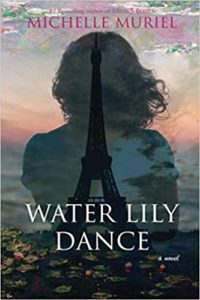
Today, Feathered Quill reviewer Lynette Latzko is talking with Michelle Muriel, the author of Water Lily Dance
FQ: The great impressionist Claude Monet and his famous paintings of waterlilies are featured in this historical fiction novel. What motivated you to write a story revolving around this particular artist?

Author Michelle Muriel
MURIEL: As in my debut novel, Essie’s Roses, and now in Water Lily Dance, I revisit my favorite subject: freedom and the courage to fight for its many forms. When young Claude Monet set out to paint his goal wasn’t to change the world. Monet desired to paint the truth of what he saw using his technique and not the classical ideal or how and what others demanded. That is powerful when you understand the mandates and expectations of Paris 1865 placed on artists. An artist faced government censorship and slammed doors at earning a living when they deviated from tradition and mandates. Yet, a group of painters (the Impressionists) dared to pave the way for free expression. That is what attracted me to Claude Monet’s beginning, his famous friends, and the young woman in the middle of it all: Camille.
FQ: One of the themes in Water Lily Dance is love and loss. Have you ever experienced anything similar?
MURIEL: Sophie’s Journey: After the death of my mom, a casualty to a national drug shortage for a chemotherapy drug to extend her life she could not get, I had to follow my heart and write this novel as a dedication to her. I decided to share my experience with loss, the secret side of grief between daughters as caretakers and mothers with end-of-life secrets and wishes. My mom was a 1960s wife who dreamed of becoming an artist, but she set that dream aside to raise her children. Though she never realized her dream, art resided in her soul, art, and creativity she gifted to her children. And so, for a few pages, my mom was a famous artist: Josephine de Lue. Sophie’s Journey is one from my heart to my readers and offers a massive dose of hope.
A line in Water Lily Dance from one of my favorite characters, Annabel, spoke healing to my own loss: “We do not move on from grief; we move through it.” That is the magic of writing when whispers appear on the page that soothe my soul.

FQ: Historical fiction is a good blend of imagination and truth wrapped up in one story. What were the steps in your research to make this novel's historic details accurate?
MURIEL: When I started writing Water Lily Dance, I had no idea the monumental task of research required regarding the birth of Impressionism, its many artists, their "new" Paris, and the lives of a trailblazing couple surrounded by famous friends and patrons. Because Monet spoke little about his upbringing and often exaggerated facts, the only way to truly know young Claude Monet was to study his famous friends and letters as Auguste Renoir, Frédéric Bazille, Émile Zola, Alexandre Dumas, Gustave Courbet, even a wealthy French code breaker in the military, and other celebrities of the day. I consulted several online catalogs, art museum archives, auction house records, numerous books, 19th-century French documents, and letters regarding the history of Monet and his friends.
And there was Camille, a mysterious and misunderstood figure in art history. We know little of her background because Claude Monet destroyed all letters, photographs, and diaries relating to her existence, with one exception: the eighty portraits he and his fellow Impressionists painted of Camille, many Monet kept and repurchased from previous buyers in his private possession until his death despite his remarrying. This fact alone began my quest to dig deeper in archives, hundreds of letters and 19th-century French records and publications to find more about Camille Doncieux and her family and I did. This thread enabled me to paint the layered life of this intriguing woman, an important figure in the Impressionist art movement I believe in more ways than we will ever know.
FQ: If you could go back in time and speak with Camille Doncieux and Claude Monet, what would you say to them?
MURIEL: Great question! I would ask Camille about her family, her grandfather in particular (you’ll have to read Water Lily Dance to find out why). Why did she gravitate toward art? Did she consider acting? Camille’s connections to the theater and actresses intrigued me. We know by a letter from Monet, Camille was friends with Marie Samary, niece to the most famous actresses in Paris at the time. Marie’s little sister Jeanne Samary (who was nine when Camille met Monet and Renoir) grew up to be one of Renoir’s famous models.
I would ask Monet many questions about his art and life. Did he ever dream his paintings? He prided himself in working directly from nature, painting as if seeing it for the first time, but the dreamlike quality of his later works, especially his water lilies, makes one ask, how did he see this? The art establishment singled out and censored Monet as they did his mentor years before, Gustave Courbet, especially when Monet started making progress, to teach him and the “new” artists a lesson and to squelch their movement. I would ask Monet, what kept you going? I image he would answer with his famous quote: “Color is my day-long obsession, joy and torment.”
FQ: Throughout the story, it is mentioned that Monet feels he does his best painting outside in a forest. Is there any particular place you prefer to write that helps spark your creativity and allows you to write more freely?

MURIEL: My favorite writing place is the Missouri Botanical Garden. I wrote much of Essie’s Roses and Water Lily Dance sitting in a Victorian greenhouse originally built as an orangery. I love it in January, warm and fragrant with lemon and lime trees. I wrote several scenes for Water Lily Dance in their Japanese garden and rainforest inside a massive greenhouse called the Climatron. It is an amazing escape. I lose myself among roses and water lilies. The ornamental flowering cherries and massive old trees in the Garden invite imagining. The stories they could tell.
FQ: Water Lily Dance is your second published book (Essie’s Roses being your debut). Did you do anything differently when writing this novel, or have you learned anything from your first publishing success that you would like to share with aspiring authors?
MURIEL: Yes! I first wrote Essie’s Roses as a screenplay, which was a tremendous challenge to develop organically into a novel. Though my acting background plays a vital role in how I see, hear, feel, and write, this time, it was important to me for this novel to flow from the character’s experience. Writing two stories and a dual timeline challenged me. Water Lily Dance was a different novel because I wrote it as a dedication to my mom, our relationship, and her love for art. Many of Sophie’s experiences with loss and her mother in the book are mine.
To aspiring authors: know your voice. Second-guessing is the killer of art and originality. We all have self-doubts, especially starting out. Monet battled self-doubt toward his paintings until his death! You have to know what you uniquely bring to the table in any art form and believe in yourself. If you don’t believe in your story, how can readers?
Dare to be unique and don’t look back. I have always tended to gravitate to doing what well-meaning “experts” declare “I shouldn’t do.” I read a book on writing that warned first-time authors don’t write in first person and multiple viewpoints. I wrote Essie’s Roses from the viewpoint of four women! I read multiple timelines should rarely be tackled (for a good reason!). Water Lily Dance is a dual timeline novel. I hated running in grade school and signed up for the mile run on field day. I don’t know why I do that. I see the reasoning; it’s hard. But that doesn’t mean you shouldn’t try it. Make it your own! I don’t believe in limits in art, but you have to know your craft, work at it, then throw it out the window. As Claude Monet says, “I utilize technique and abandon it all in the same.”
The best advice I received from a mentor I sadly lost this year, was to set the writing aside for however long you need so that you can be objective; and write everything. The more you write, the more you will discover who you are as a writer. Lastly, let your characters live within the book, not within the author.
FQ: Can you recommend any great books for readers to expand their knowledge of Impressionist art?
MURIEL: So many! A few of my favorites: Claude Monet The Water Lilies by Georges Clemenceau; Monet by Himself edited by Richard Kendall is a fascinating look at Monet’s paintings, drawings, pastels, and letters. Origins of Impressionism, Gary Tinterow, Henri Loyrette (The Museum of Metropolitan Art); Frédéric Bazille and the Birth of Impressionism, Michel Hilair and Paul Perrin; Monet and His Muse, Mary Mathews Gedo.
FQ: Throughout the story (and in real life), artists are being discriminated against for their work. Whether it be the Salon that didn't accept their work, or families who didn't want their children to marry an artist. Has there ever been a time when you felt discriminated against for being a writer?
MURIEL: Yes. A disheartening, unfair, complex issue. But as the Impressionists found their outlet, today, writers and artists have opportunities to share their work with the public. We don’t have to wait years for open doors; we can open them ourselves. My readers are the kindest, giving people and relentless in their support when a story touches their heart. I’m grateful for and treasure their beautiful encouragement and support. It’s vital. It is 150% more work, but if you love it, you’ll keep going no matter who says no.
FQ: What can readers expect from you in the future? Will there be more stories involving Camille and Sophie, and the next chapters in their lives?
MURIEL: My readers have been asking for a sequel to Essie’s Roses. I’m happy to announce, I’m writing it now: Westland. I love the characters in Water Lily Dance. I’m exploring continuing Camille’s story and taking Sophie’s story in a different direction, perhaps in another book. Stay tuned! Readers can keep up with me on Goodreads and Facebook and get the inside scoop via my newsletter. Sign up at www.michellemuriel.com.
Thank you so much for the opportunity to share my heart and answer questions about my new novel!

#AuthorInterview with Dr. Manjeet Kaur

Today, Feathered Quill reviewer Diane Lunsford is talking with Manjeet Kaur, the author of My Garden of Flowers: Miracles in the Neonatal Intensive Care Unit
FQ: It was an absolute honor to read your book. The layout, the artwork, and the cover speak volumes about the care you took in laying out this entire body of work. When you first decided to write the book, did you have a specific process for how you organized the stories? Was there ever a time when, while chronicling the multitude of stories, you became overwhelmed?
KAUR: For over a decade, I felt a need to put the stories of my tiny cherubs on paper, something tangible that would provide realistic support for distraught families as their babies rode the NICU roller coaster. I did begin with a specific organization process: Each story would start with a foreword, a photo, and a poem dedicated to the little one; then a card with birthweight, gestation, and diagnosis, followed by the parents’ heartwarming stories of their joys and trials. There would also be a collage of each baby: one photo while seriously ill in the NICU, and various photos depicting their growth over the years.
FQ: In line with question 1, if you did get overwhelmed, how would you “reset” and get back on track with your writing?
KAUR: It was overwhelming at times, especially considering the enormous amount of information and how to fit all of it into just a few pages, but for the most part “the moving pen wrote on.”
FQ: There is a lovely undertone of faith and spirituality throughout your book. Which of the many vignettes was particularly difficult to write, and which seemed to “write for you”?
KAUR: It’s always easier to write about the victories than about the losses; however, my emotions took over, and with God’s grace the narratives just flowed.
FQ: I was in awe of the many “flowers” you wrote of and the will and fight they each had. I was further impressed with the admirable achievements they accomplished later in life, i.e., Jacqueline Hynes playing at Carnegie Hall. Of the many babies you have blessed with your care, if you had to name the one who beat the most grievous odds, who would that be and why?
KAUR: It’s hard to name one—each one so dear, all with their own odds to beat. Do I name little Jonathan or Heidi, little Bud or Quinn and Dylan? Tiny Jonathan, however, who was born at 23 weeks and was almost the length of a pencil, was quite a challenge, as this was back in 1989. The mother of Tiny Quinn and Dylan ruptured her membranes at 20 weeks’ gestation, but she beat the odds with reaccumulation of fluid, and finally delivered at 25 weeks.
FQ: There were times throughout this read when I had to set the book down and take a deep breath. The beginnings of life for each of these babies was so heart-wrenching. Yet, even in the direst of premature births, you painted an aura of positivity. When you were in the moment of the actual births, how did you ever maintain faith and composure?
KAUR: I find each birth a tiny marvel. It’s my strong belief that we are merely puppets in the Lord’s hand. I always said, “We’ll try our best; the rest is up to Him.” That brings solace and acceptance. Believe me, we were not always calm. Many a time I’ve been in tears, holding hands with moms. Still, photos of our babies on the bulletin board in my office—a 23-week baby at age 4 doing ballet; 25-week babies at age 10 years playing lacrosse; and two-year-old preemies on hanging bars are wonderful evidence of their potential. “Our Amazing newborns,” as we call them, never fail to amaze us—and fortunately, mostly in positive ways. I always tell parents, “We need to remain realistic but positive.”
FQ: I read in your bio that your husband is a cardiologist. With two doctors in the house, were there times when you both would make a pact of “no shop talk tonight” and if so, what would trigger the sentiment?
KAUR: I can’t say I wouldn’t talk shop at home. My workplace was my extended home, and even while maintaining confidentiality I often brought my problems home. On vacations (though not always successfully) we tried not to talk about work Both of my boys are in the field of medicine, so they must have seen positivity in our extremely busy schedules.
FQ: I was taken by the account of Johnathan Sherts’ delivery. I cannot even fathom what it would be like to deliver a baby weighing only 1 pound, 7 ounces. The photo of him lying next to a pencil (and the pencil is nearly the same length as he) was shocking. What goes through your mind at that instant of delivering such a fragile being of life?
KAUR: After a while your work becomes routine, protocols to be carefully followed. “My lil’ baby,” as I still call my 6 foot tall 29-year-old young man was a challenge; however, we placed tubes and lines as per NICU routine. In those circumstances we don’t have time to think otherwise once the decision to resuscitate has been made.
FQ: Is there a particular birth that stands out still to this day that you give a sigh of relief that he/she defied the odds and thrived? Could you please share?
KAUR: Bud, a tiny baby, had his eyes fused at birth, a fact that would normally deter us from resuscitation; however, Bud continued to have a strong heartbeat, so we resuscitated him. Today, thirty years later, he is a wonderful young man, a lovely part of his family—and mine.
FQ: It’s abundantly clear the babies were a tremendous inspiration for you to write your book, but it sounds like you had amazing coworkers through the years. Who of your colleagues was your greatest cheerleader and supporter through this process, and why him or her?
KAUR: Our nursing staff, my coworkers, are awesome. I call it our NICU family. I think my greatest supporters are the NICU staff—it would be impossible to choose just one
FQ: You pay many lovely tributes to the amazing NICU nurses you worked with over the years. How often do you have reunions with these “heroes”?
KAUR: We have reunions every two to three years; in fact, we had one just this past May. It featured a book signing, and so many of our special heroes attended.
FQ: Thank you again for the pleasure of reading My Garden of Flowers. It’s a beautiful book and I thoroughly enjoyed reading about the life and times of the many “beautiful flowers” you brought into the world. Are you working on your next project? If so, are you able to share?
KAUR: Writing My Garden of Flowers was a privilege, never a chore, though I do need some time off from writing, so I haven’t yet begun a new project. Lest I forget, I’m delighted to say that all the proceeds from the sale of the book will be donated to charity.

#BookReview - Experiment #256


Experiment #256

Written and Illustrated by: Marty Kelley
Publisher: Sleeping Bear Press
Publication Date: July 2019
ISBN: 978-1534110137
Reviewed by: Ellen Feld
Review Date: Ausgust 24, 2019
A clever boy and an adorable dog with comical expressions come together for a very funny book about jet packs and flying into space.
Ian is a bright young man who likes to build things. He also keeps a science journal to record his exploits. Today he is working on “Experiment #256” which is an experiment to “build a jet pack for my dog, Wilbur.” What could possibly go wrong?
The story is told through notes that Ian writes in his journal as his project comes to fruition. The first note has these bullet points: “Launch was successful, jet pack is very fast, leftover parts may have been the brakes.” No brakes? Oh, oh, that doesn't sound good...
Poor Wilbur flies through the air, the house, the backyard, and eventually, up into space. As he zooms about attached to the jet pack, he bonks into various people, each of whom is “not happy.” When he flies off to space, it looks like he might be lost forever. How will he get home?
Experiment #256 is a wacky, hysterically fun adventure about a boy and his very sweet dog. Told with minimal text – the brief notes on each page are the only text – the story is really told through the fantastic illustrations. Wilbur’s facial expressions are priceless, as are the reactions of those impacted by him buzzing by them. The story has a happy ending, with Wilbur getting the best deal out of a somewhat broken jet pack, and kids will no doubt love the adventure “his boy” Ian sends him on.
Quill says: Youngsters, whether budding scientists or not, will love Experiment #256and no doubt burst out in giggles as Wilbur the dog flies about with his jet pack.

#BookReview - Santa's Secret

Santa's Secret

By: Denise Brennan-Nelson
Illustrated by: Deborah Melmon
Publisher: Sleeping Bear Press
Publication Date: August 2019
ISBN: 978-1534110380
Reviewed by: Ellen Feld
Review Date: Ausgust 24, 2019
Christmas is coming and everybody is excited. When the family climbs into the car and heads downtown to celebrate, the young protagonist of the story notices that there’s more than one Santa. It will require a bit of investigative work to discover the truth...
Mom, Dad, Grandma and the young star of Santa’s Secret (we never learn her name) are in the city to enjoy all that the Christmas season has to offer. They watch a holiday parade and our protagonist is happy to see Santa riding in his sleigh. But when she is later walking along the sidewalk, she’s startled to see Santa again, this time raising money for a charity. But she instantly knows that this Santa is not the same – he’s wearing the same outfit, but the face isn’t the same. And then at “Santa’s Station,” where children get to tell Santa what they want, she sees the jolly man again and notices that this is yet another Santa. What is going on? It’s time to put on the detective hat and get to work.
His beard was as white as fresh-fallen snow.
And his belly jiggled with each “Ho, Ho, Ho!”
I had questions for Santa. I would see what he knew –
About reindeer and elves and the rest of the crew.
I got out my notebook. I would crack this case wide!
From a good detective, the truth cannot hide.
Santa’s Secret is an adorable book and one that helps answer the question that undoubtedly so many children have asked – which Santa is the real one? Told in an easily flowing rhyme that keeps the story moving, the tale is fun and will draw youngsters in as they want to solve the mystery too. The illustrations, by Deborah Melmon, and playful and bright and mesh perfectly with the story. And parents, no need to worry – the solution the author comes up with is one that will keep everybody happy.
Quill says: Don’t wait until Christmas to buy this book! Get it now and help your little ones solve Santa’s Secret!

Tuesday, August 20, 2019

#BookReview - Resurrection Lily @BRCAresponder

Resurrection Lily: The BRCA Gene, Hereditary Cancer & Lifesaving Whispers from the Grandmother I Never Knew: A Memoir

By: Amy Byer Shainman
Publisher: Archway Publishing
Publication Date: December 2018
ISBN: 978-1-4808-6706-2
Reviewed by: Skyler Boudreau
Review Date: August 18, 2019
Resurrection Lily is a memoir by Amy Byer Shainman that revolves around her having a BRCA gene mutation that greatly increases her risks of developing certain kinds of cancer. In this book, she shares the remarkable story of her life spent fighting it. She describes her inner struggle making the decisions to undergo preventative surgeries that will reduce her enhanced risks and paints a vivid portrait of her experience as a high-risk patient.
Shainman tells not just her own story, but weaves together an expansive history of cancer in her family and friends. It seems everywhere she turns she is confronted by the disease, and instead of standing by passively, she attacks first, both protecting herself and becoming a patient advocate for others facing similar situations. She frames her experiences with cancer like a battle, explaining, “My competitive nature and drive that had begun on the soccer field was lending itself to this medical situation. I wanted to be in control of things. I didn’t want any surprises.” (Shainman 53)
Resurrection Lily dives deep into the medical world, tackling complicated topics like genetics with straight-forward and easy to understand explanations. At the same time, she is also very blunt and doesn’t sugar-coat any of the ugliness that comes with fighting cancer. Shainman details the importance of both genetic testing and genetic counseling in families with medical histories of cancer, while simultaneously describing her own worries and concerns.
Even with the focus on medical explanations, Shainman’s memoir is still raw and emotional. As she is preparing for her prophylactic bilateral mastectomy and breast reconstruction, she is hit with the news that her friend Kristin, a woman in a strikingly similar situation as herself, is dying. “Her impending death hits me in a deep place. It makes me want to go cut my tits off right now.” (78) This hurts Shainman and it hurts the reader. Throughout her story, Kristin is presented as one of the strongest people Shainman has ever met. If someone like her can succumb to cancer, then anyone can. Shainman is admirably open about her experiences, sharing everything from intimate family medical history to moments like Kristin’s death.
Shainman also makes a point to discuss the media reaction to the BRCA gene mutation. It moves into the public light after Angelina Jolie opens up about her own diagnosis through two different op-eds. Shainman is especially vocal about the different news outlets consulted while covering the story. “...most of the interviews I read or saw on the news were with a physician who did not specialize in genetics. Since Jolie’s initial op-ed article was such a huge story, a global story, it seemed to me that many news outlets, television shows, and radio stations were just scrambling to get any medical expert on the air (no matter the person’s qualifications) as fast as they could.” (187) She goes on to explain the missed opportunity to spread awareness about the risks male carriers of the BRCA gene mutation face. Shainman is concise in her explanations of why both the media reaction and Jolie’s articles left some things to be desired.
Resurrection Lily is a powerful and intelligent memoir from a woman forced to make difficult personal health decisions. Amy Byer Shainman takes her readers through every step of the process. She goes out of her way to teach patients how to advocate for themselves and seek proper medical treatment, a sometimes daunting task. Readers will close her book with a sense of empowerment, thinking about their own family medical history and genetics in a way they might never have done before.
Quill says: Resurrection Lily is an applause worthy memoir that will affect its audience in deep and unexpected ways.
For more information on Resurrection Lily, please visit the website: brcaresponder.com

#BookReview - Water Lily Dance

Water Lily Dance

By: Michelle Muriel
Publisher: Little Cabin Books, LLC
Publication Date: August 2019
ISBN: 978-0990938347
Reviewed by: Lynette Latzko
Review Date: August 19, 2019
Author Michelle Muriel delights readers once again with her sophomore novel, Water Lily Dance. This historical fiction drama guides readers through the lives of two resilient women living in two separate eras, one, 19th century Paris, and the second, modern-day Missouri. Intertwining their lives in the backdrop is the artist Claude Monet and his famous paintings of waterlilies.
In the 1800s, Camille Doncieux is a young lady living in Paris with a close relationship with her father and younger sister. She faithfully works in her father’s shop, but longs to break free of the rigid French traditions and make her own decisions, especially regarding whom she is to marry. Despite her father’s wishes, Camille befriends several local artists, who themselves are bucking the strict rules of traditional art forms in Paris, and agrees to pose for a few of their paintings. Camille is drawn toward one particular artist, Claude Monet, and together they fall in love, but she is torn between her expected life in Paris with her family, and the often times rocky, and not-as-respected life among artists with Claude.
Sophie Noel is a strong woman, who has had more than her fair share of loss in recent years. She had just started to cope with the death of her father, whom she has had a complicated past with, when her husband died tragically in an accident. This sends her into a major tailspin that she cannot seem to positively get through, despite the encouragement of her mother and close friends. One thing that she clings to besides her mother is art, particularly that of the painter Claude Monet, who whispers wisdom to her in her mind. Unfortunately, Sophie is left completely alone, swallowed up in her grief after her mother dies, and not knowing how to progress past the sadness. Together with a cast of dynamic and likable family and friends, Sophie is taken on a journey of her past and present that includes a few twists and surprises (including meeting a handsome Parisian!) that will hopefully allow her to work positively through her grief and move on to a happier, fulfilled life.
Water Lily Dance is more than a mere novel that happens to revolve around an Impressionist artist. It is a wonderfully written, sometimes a bit wordy, but nevertheless, moving portrayal of the strength and resilience of women, centuries apart. This reviewer was delighted that, shortly after reading this novel, I was able to visit an exhibit entitled, The Impressionist’s Eye, at the Philadelphia Museum of Art. Author Michelle Muriel’s writing is so vividly descriptive throughout the entire story, that I too felt as if I could hear Claude Monet and his contemporaries whispering in my ear. This novel is also a great reminder, specifically for women readers, that we can move through and overcome grief and other obstacles, if we just give it, and life, a chance.
Quill says: Water Lily Dance is a beautifully moving story about women, love, grief and overcoming adversity; a story that should not be missed.
For more information on Water Lily Dance, please visit the author's website at: www.michellemuriel.com

#AuthorInterview with Helena P. Schrader @HelenaPSchrader

Today, Feathered Quill reviewer Amy Lignor is talking with Helena P. Schrader, the author of The Emperor Strikes Back
FQ: As I get even further into these novels, I have to know: When you began, did you have the series (as such) outlined on paper, or at least in your mind of how far you would go with it?
SCHRADER: Not at all! Things always start small. A spark, an idea that grows into a book concept, then lots of research. Then when I start writing I either have a little novel or I discover I can't possibly do the characters justice in a novel that is affordable. I used to write 1,000-page novels, but big books just frighten readers away and require big price tags. So although it may be one idea and one story to me, it gets broken down into pieces to keep the paperback price around $20 and the ebook price close to $5.
This series is unusual, however, in that I was attracted to the civil war in Outremer -- the focus of the current series -- a quarter century ago, wrote a trilogy called The Lion of Karpas, and then shelved it as completely unmarketable. I then wrote about WWII (3 books), Ancient Sparta (6 books) and then got interested in Balian d'Ibelin the elder after seeing The Kingdom of Heaven. It was only after I was deep into the research for the Jerusalem trilogy that I discovered that the Balian who defended Jerusalem against Saladin in 1187 was the father of the "Old" Lord of Beirut -- the hero of the baronial revolt against Frederick II. So, all my interest in the civil war in Outremer was re-ignited and it made sense to build on the success of the Jerusalem trilogy by writing about the next generation of Ibelins. 
The Last Crusader Kindom was a "bridge" book between the two series -- and a self-indulgence as I wanted to write that book to close out the story of Balian (the elder) and Maria Comnena, even though the story did not belong in the Jerusalem trilogy. 
FQ: How, when and where did this particular piece of history grab you like it has and cause you to have your own crusade in the publishing world?
SCHRADER: A trip to Cyprus by accident. My husband and I had planned to go to Egypt, but political violence/terrorism there made us change our travel plans at short notice. We chose someplace that was still comparatively warm (we were coming from Northern Germany), and we found a package deal to Cyprus. I knew nothing about Cypriot history. We arrived and suddenly I discover that the Richard the Lionheart had been there, or rather, not just been there, he had conquered the island and established a kingdom that lasted three hundred years. Then I saw the castles and I was hopelessly lost in the history. 
FQ: Is there one character in these books who has became “larger” than what you assumed they would at the onset; if so, who would that be and why do you believe the focus on them increased?
SCHRADER: This question can be answered in two ways. I really struggled with both my leading characters because there is less material about them. For Balian, I also had the problem that he was -- and had to be seen to be -- very different from his grandfather (the hero of the Jerusalem trilogy) and STILL be an attractive character. As I worked on developing him, I discovered things consistent with the historical record that I genuinely came to understand and admire. Eschiva, on the other hand, gets about three sentences in history and she was a complete invention. So simply because the starting baseline was so low, she grew even more in the course of both novels, but particularly in the second (The Emperor Strikes Back). Of course, as the hero and heroine, the amount of space devoted to them did not increase particularly
If the question is about a character who effectively butted in and took more space than planned, that would be Bella. Bella is literally just a name on a genealogy table, so her character is my invention as is her role in the siege of Beirut, but once I'd put her there, I couldn't abandon her. 
FQ: Along those same lines, can you share with readers who is your favorite character and least favorite, and why?
SCHRADER: As characters or human beings? For favorite: if I wasn't a little in love with my hero I wouldn't be able to write about him, and the same goes for the heroine. But Bella and Hugh are close rivals. 
For least favorite: Historically, I detest Frederick II -- particularly because I feel the usual adulation of him is so overblown and largely based on ignorance of the Holy Land, i.e. is based on false premises or a narrow focus on the West and his conflict with a series of even more bigoted and selfish popes. As a character in the book, obviously the most disgusting person in Sanuto -- the representative/incarnation of arrogant male privilege and the callous abuse of women. 
FQ: What happens when this comes to an end? Have you thought about how extremely difficult it will be to say goodbye, so to speak? Or do you have another series already percolating that you’re researching now?
SCHRADER: I don't even want to think about the end. I have three more books set in the crusader states, two novels (the rest of the series) and one non-fiction, which will be the greater challenge. The point of the later book, tentatively titled Beyond the Seas: The Story of the Crusader States, is to create for non-academic readers a comprehensive picture of these unique political entities at the crossroads of East and West, on the interface between Christianity and Islam. There has been a great deal of academic research and many scholarly works have been published demonstrating how tolerant and innovative these states were, yet most people still equate everything having to do with the crusades with "genocide," bigotry and violence. I'm quite passionate about correcting that image, as you can tell, and know that doing a non-fiction book will take a huge investment in time. In short, I expect I'll remain in this era for at least another three years. I can't think beyond that. 
FQ: Literary awards, graduating with honors, unending accolades – what is the most amazing thing that has occurred during your career? A moment in time, perhaps, that you were not expecting that literally had you stunned?
SCHRADER: Interaction with real heroes. I had the amazing opportunity to personally get to know some of the survivors of the German Resistance to Hitler -- Axel von dem Bussche, Ludwig von Hammerstein, Philipp von Boeselager, Marion Graefin Yorck, Nina Graefin Stauffenberg, Claritta von Trott zu Solz, Friedrich Georgi and, of course, General Friederich Olbricht's widow Eva. As a writer, however, the greatest "accolade" was when I received a hand-written letter from Wing Commander Bob Doe, who had flown fighters for the RAF in the Battle of Britain, in which he told me my novel Chasing the Wind was "the best book" he had ever read about the Battle of Brittain an that I'd gotten it "smack on the way it was for us pilots."
FQ: Do you ever get tired or exhausted by the research you have to do? (As a person who loves libraries, I can understand if the answer is “no.”)
SCHRADER: On the contrary, the research is energizing and always sparks new ideas -- sub-plots or minor characters.
FQ: Is there one thing in the literary world you wish would change? Whether that be a genre you feel needs more books or authors in it? Social media and the way it helps or hurts an author? Things like that.
SCHRADER: I wish filters would start to kick in to reduce the amount of trash being dumped on the market on a daily basis. I'm grateful for print-on-demand and self-publishing enabling greater diversity of titles and opening up publishing to more authors than fit the straight-jacket of the established commercial publishers, yet at the moment things have gone too far in the other direction. With 4,000 new titles every single day, far too many good books are being lost in the flood of sewage. 
FQ: Of all the journeys you’ve had, is there a location you can say is a favorite of yours? Is there one that inspires you to write or investigate the past when you go and/or visited there?
SCHRADER: There are so many! Cyprus itself, Sparta, the castles of the Languedoc, the bastides of Southern France. Places have always played a large role in setting me on one track or another.